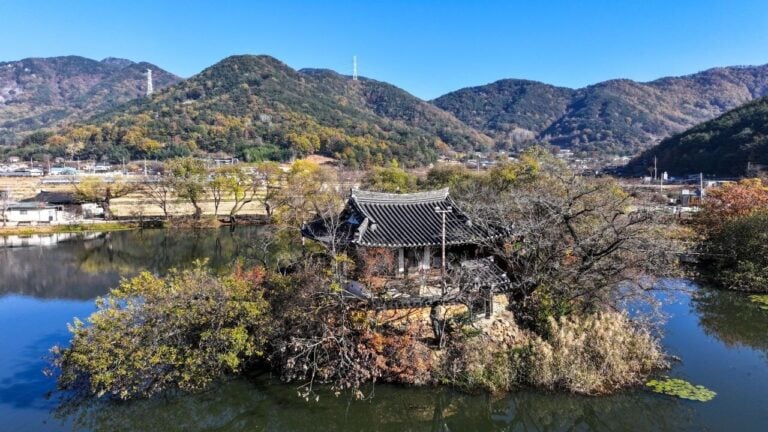
Jangseong Cypress Forest: Tall Trees and Woodland Paths on Chukryeongsan Mountain
Explore the cypress and cedar landscape of Jangseong Healing Forest, from towering trunks to paths that disappear around a bend
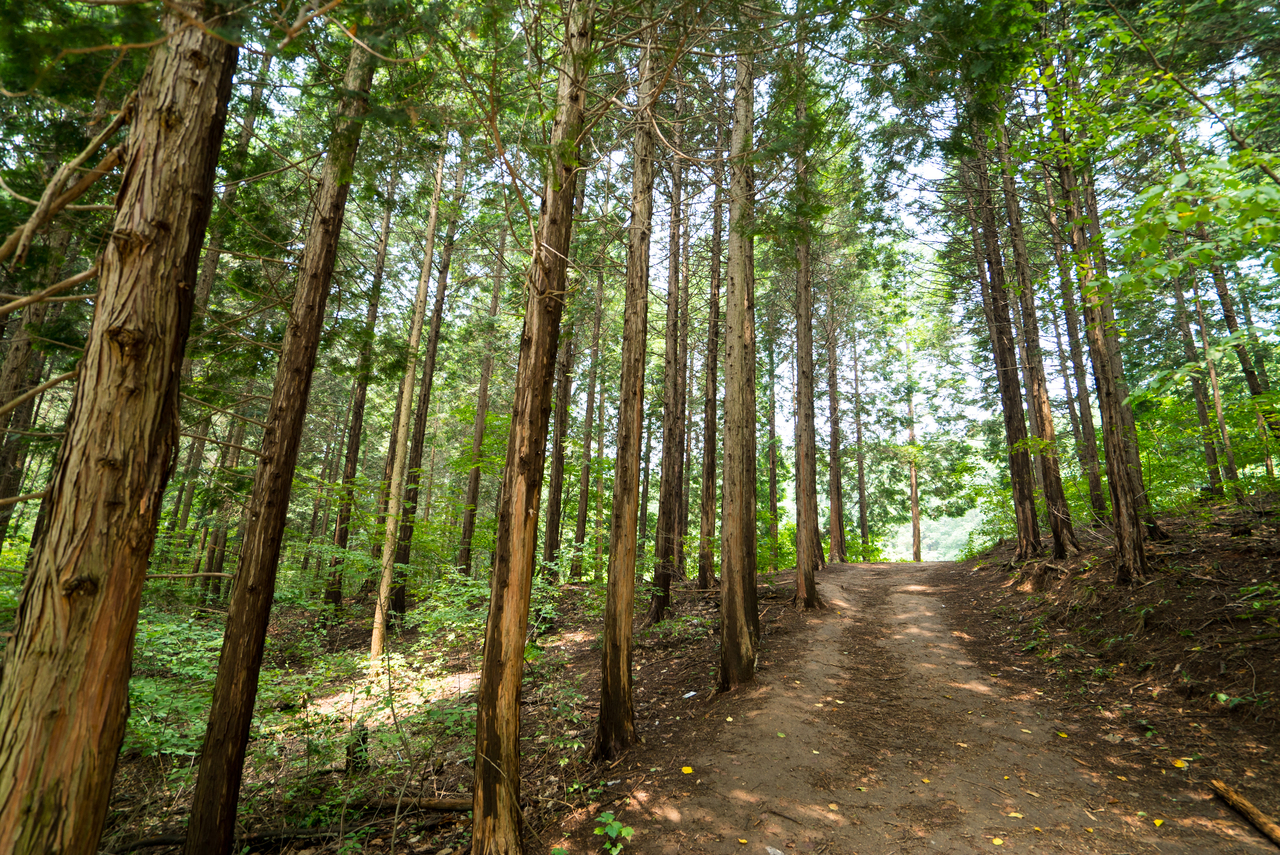
The trees rise straight up while the path slips between them. Close to the ground, brown bark catches the eye. Higher overhead, branches overlap and leave smaller openings to the sky. A pale stretch of trail gives the dense woodland a sense of depth.
Jangseong Cypress Forest is the cypress and cedar landscape associated with Jangseong Healing Forest on Chukryeongsan Mountain in southwestern Korea. It is distinct from the mountain of the same name near Namyangju in Gyeonggi Province. Here, the attraction is the relationship between tall trunks, a layered canopy and the ground beneath them.
Later in fall, a forest visit can have a purpose beyond catching peak foliage. Evergreen crowns hold their own character as surrounding leaves change. Looking at the shape of the woodland makes a trip less dependent on finding one particular color on one particular weekend.
Follow the spaces between trees in Jangseong Cypress Forest
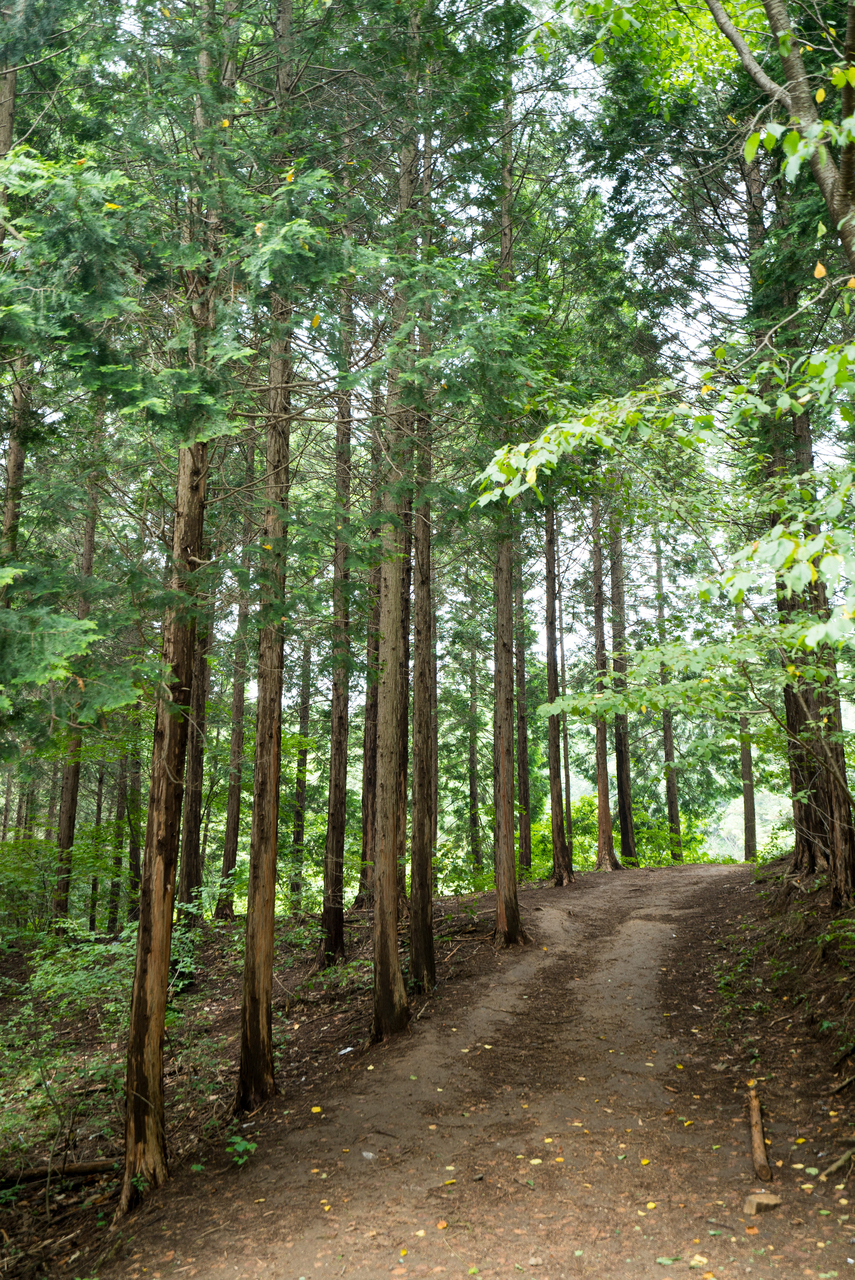
In this vertical view, the nearest trunks are broad and the trees farther away become slender lines. The path curves toward a lighter opening. Its shape makes the height of the woodland easier to appreciate than a view of foliage alone.
The spaces between trees matter as much as the trees themselves. A narrow gap opens, closes behind a trunk and appears again farther up the slope. This is a different visual rhythm from a straight avenue planted along a level street.
A summit itinerary is not necessary to understand that arrangement. Start with one nearby trunk and look for the trees partly hidden behind it. Sloping ground, roots and uneven edges add depth to a scene that can otherwise look like a simple repetition of vertical lines.
Look up to where the canopy breaks the sky into pieces
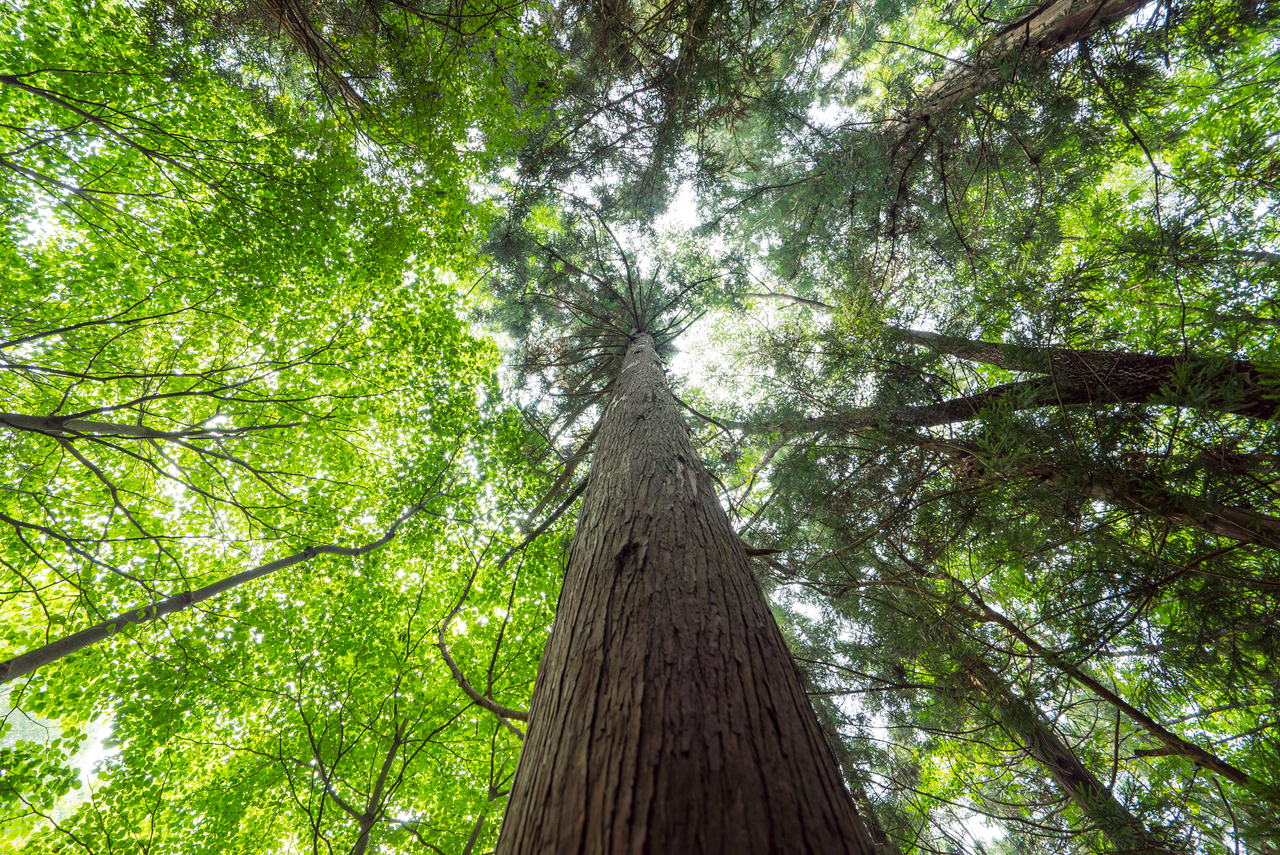
A large trunk fills the foreground before dividing into branches overhead. Leaves cross the spaces between neighboring trees. The sky becomes a collection of small openings rather than a broad backdrop.
Cypress and cedar give this woodland a strong sense of height. From below, separate trunks eventually appear to join through their crowns. Light falling between the branches creates bright edges and darker layers, changing the scene without changing the structure of the forest.
Green is not a single uniform surface here. Different leaves, distances and directions of light produce distinct tones. For a late-fall visit, looking upward offers another subject when the brightest deciduous foliage is no longer the main attraction.
Notice the broad leaves beneath the straight trunks
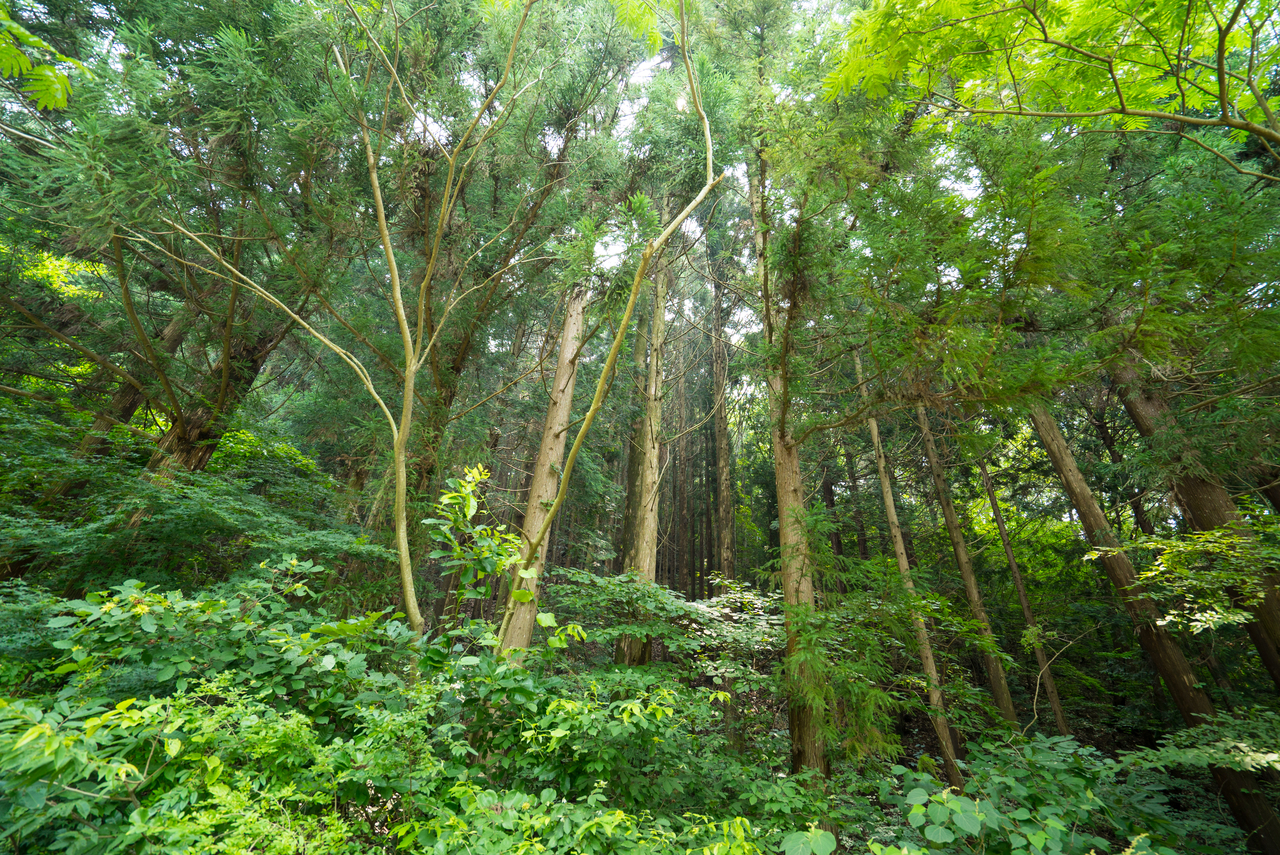
Wide leaves spread below the taller trees. Their shapes interrupt the straight lines of the trunks. Even where the scene is predominantly green, those different forms keep the woodland from reading as a single flat wall.
The cypress and cedar forest is connected with the long planting work of Im Jong-guk. That human history adds another dimension to the repeated trunks. A planted forest can still contain a varied understory and meet the surrounding woodland along irregular edges.
Try reading the scene in layers: ground cover first, leaves at eye level next, then the high canopy. Seasonal changes affect those layers differently. Evergreen trees and nearby deciduous plants do not follow exactly the same visual calendar.
Compare a pale path with the darker woodland beside it
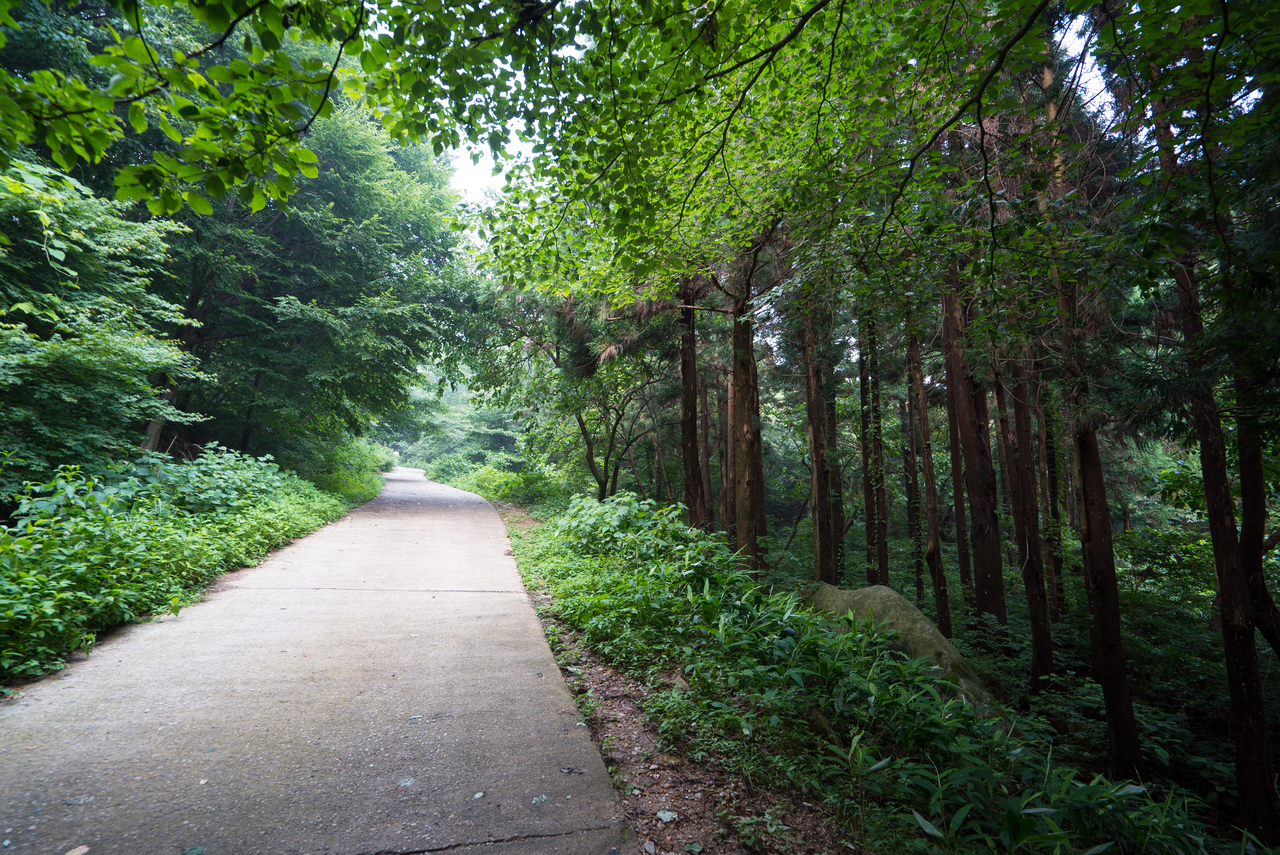
A smooth, light-colored path extends into the trees. Low plants occupy one edge while taller trunks gather along the other. The consistent width of the surface makes the changing vegetation around it more apparent.
The Korea Forest Welfare Institute’s Jangseong forest introduction identifies this as a cypress and cedar setting on Chukryeongsan. Viewing the woodland and joining a structured forest program are different activities. Shade beneath the trunks and the high canopy offer distinct parts of the woodland to observe.
An earthen path emphasizes roots and nearby ground; a more regular surface draws the eye farther ahead. The pale surface and rough bark make a particularly clear contrast. Following that boundary with the eye reveals where the path narrows into the woodland.
Let a bend in the path close the view
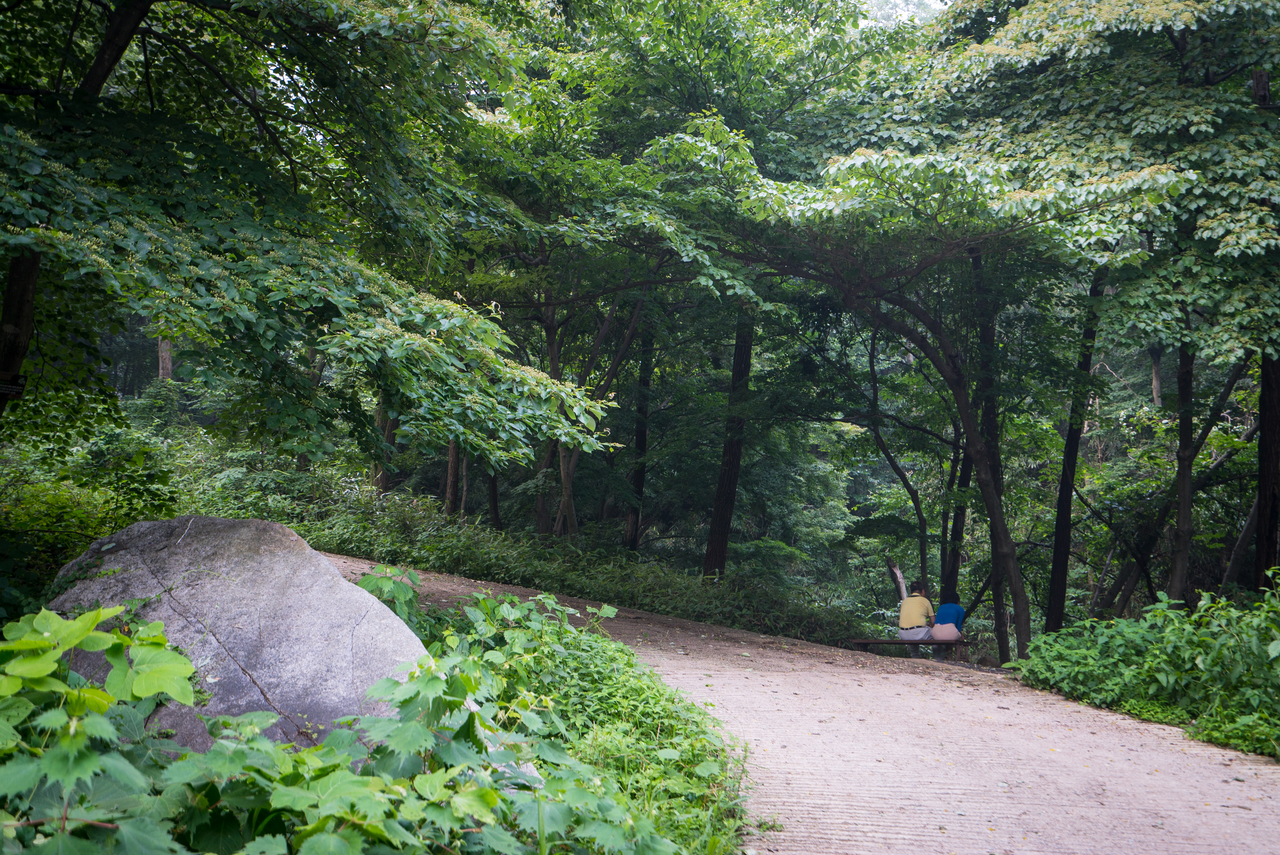
Beside a broad boulder, the path turns out of sight. Branches hide what comes next. Even within woodland dominated by straight trees, the ground introduces curves and partial views.
For a different southern evergreen landscape, explore Wando Arboretum’s forest paths and warm-temperate trees. Its varied leaf shapes offer a useful comparison with the tall, repeated trunks of Jangseong.
The forest’s appeal is not confined to the brightest days of fall color. Upright trees, a turning path and low leaves pull the eye in different directions. Those relationships give a late-season visit something specific to look for after the foliage calendar moves on.
You May Also Like
by Google Adsense