Boriam Temple in Namhae: Geumsan Rocks, Sea Views and a Coastal Buddhist Hermitage
Look between the sea-facing Gwaneum statue, a stone pagoda and tiled roofs tucked into the rocky slopes of Geumsan Mountain
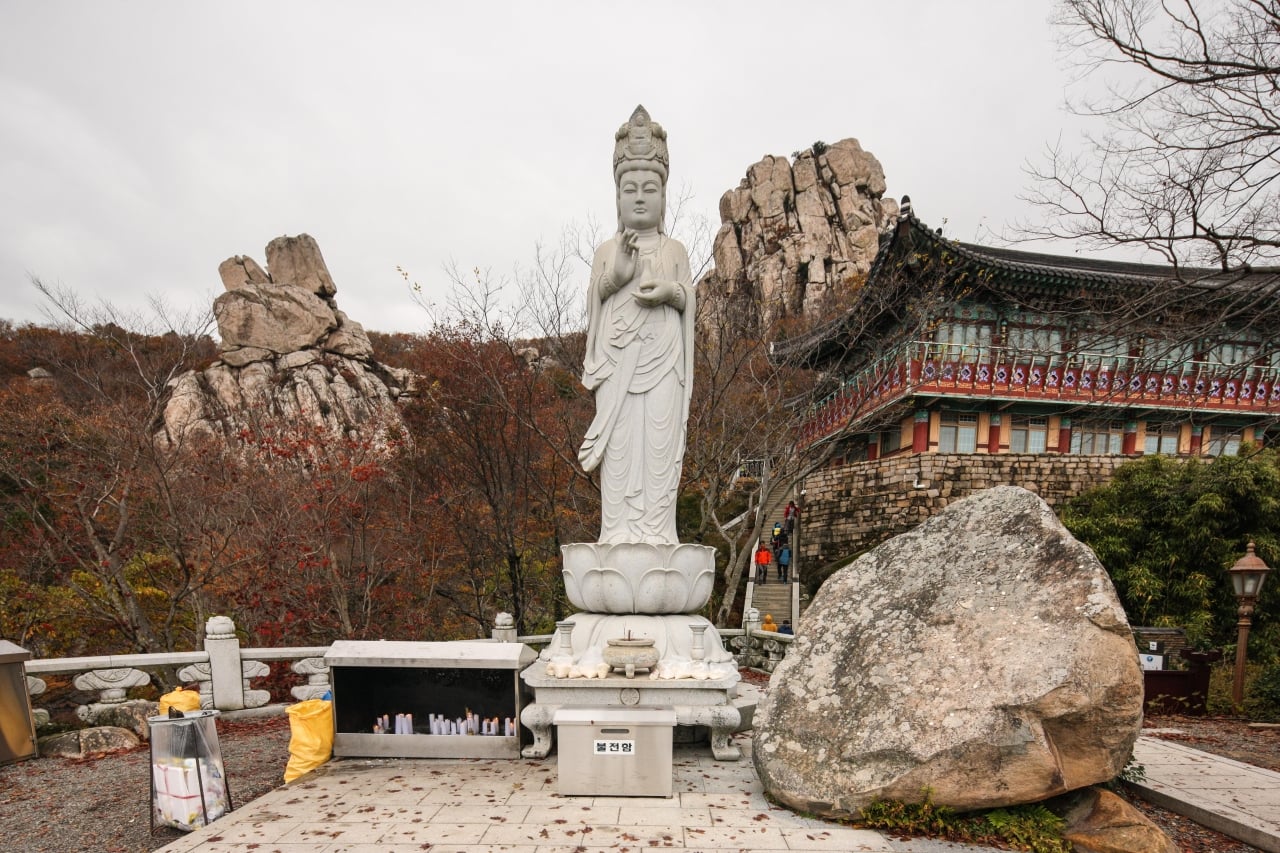
A pale stone figure stands inside a low railing. Rough boulders rise behind it, with a tiled roof fitted between the rocks. Smooth stone, fractured surfaces and painted timber occupy a remarkably compact space.
Boriam Temple, also called Boriam Hermitage, sits on Geumsan Mountain in Namhae County on Korea’s southern coast. Its setting connects the close detail of Buddhist buildings and sculpture with a much wider landscape of wooded slopes, sea and islands.
For a later-fall visit, that arrangement offers interest beyond a particular foliage window. Leaf color changes with timing and weather. The relationship between the rocks, rooflines and distant coast gives the place a distinct character as the season moves on.
Look beyond Boriam Temple’s roofs to the islands below
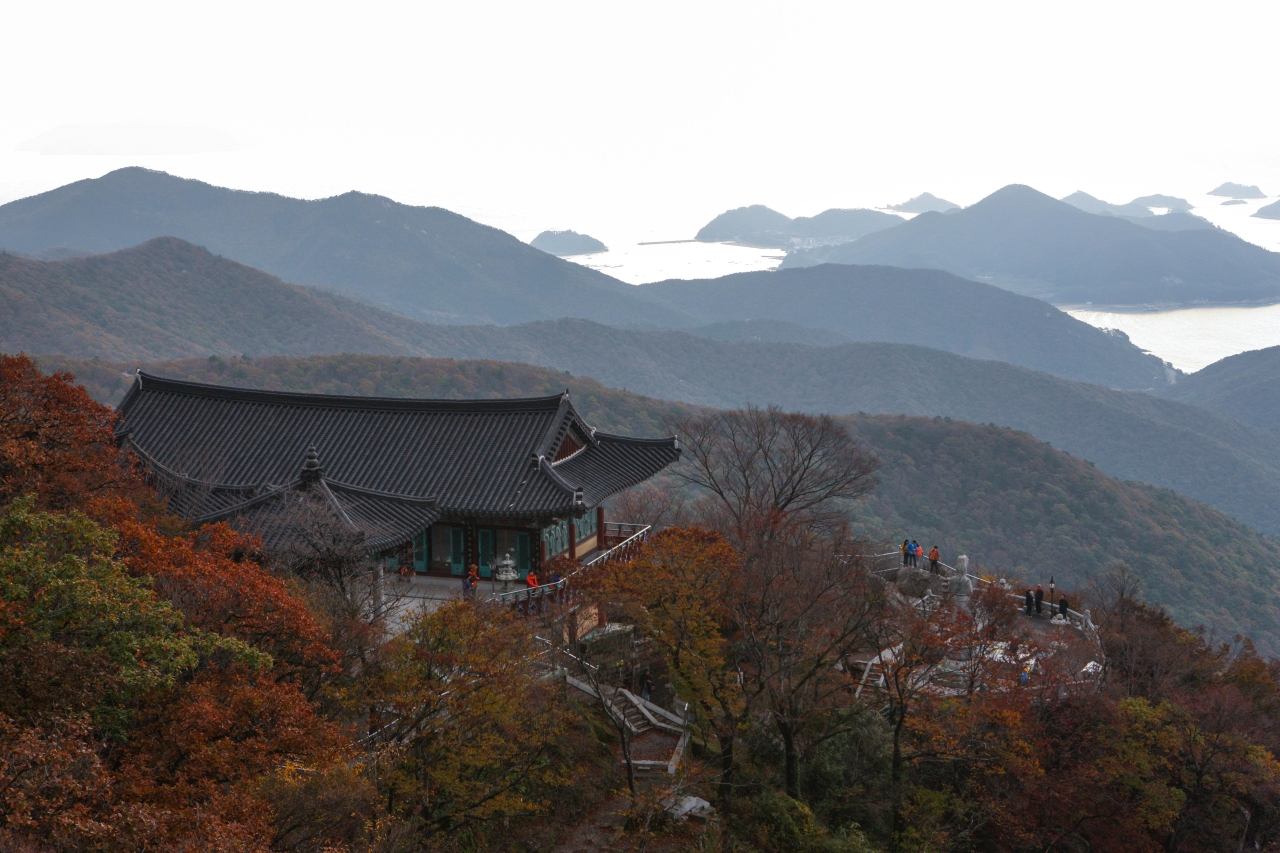
A broad tiled roof occupies a ledge on the hillside. Beyond it, lower ridges overlap in successive bands. Nearby branches interrupt the building’s outline while pale water fills the gaps between more distant landforms.
The temple can initially appear enclosed by the mountain, but a wider view brings the coast into the scene. Geumsan’s slopes draw the eye downward, then the islands extend the view horizontally. The roof acts as a reference point between those two directions.
Clear conditions separate the ridges; haze softens the boundary between water and sky. Neither a particular sunset nor perfectly open visibility is guaranteed. Reading the shapes that are visible that day gives the viewpoint a more specific purpose than waiting for one predetermined photograph.
Compare the small roof forms of the three-story stone pagoda
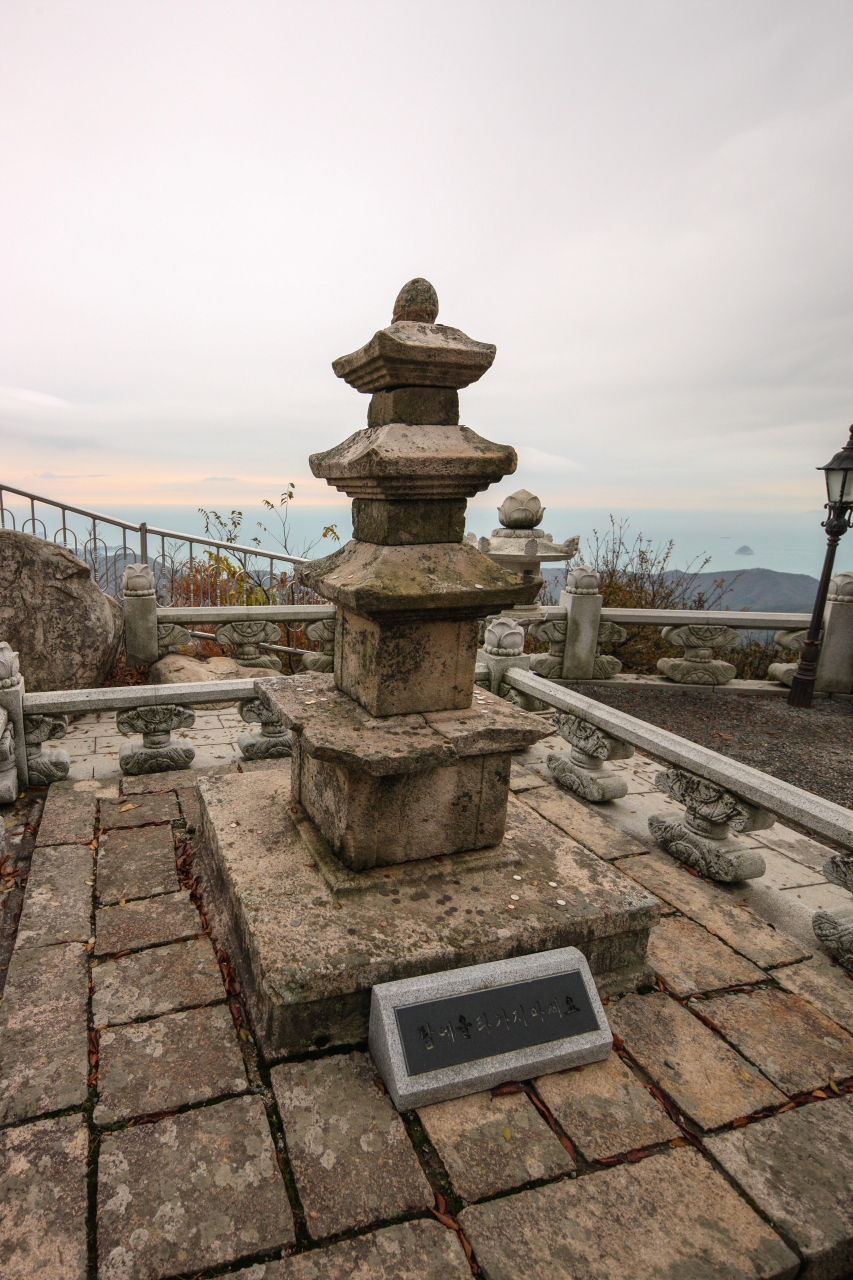
Small stone roofs sit one above another, their edges lifting slightly at the corners. The surface is uneven and textured. Although the sea behind the pagoda is much larger, the nearby stone silhouette holds the eye first.
The three-story pagoda stands near the sea-facing Gwaneum statue. Comparing it with a timber hall reveals a shared interest in layered roofs, expressed in different materials and at very different scales. A small shadow beneath a roof stone becomes as noticeable as a much larger eave.
Railings and stone lanterns bring other close details into the same space. Looking across the coast and looking at the surface of a carved object are separate kinds of observation. Moving between them keeps the foreground from disappearing into a single panoramic view.
Read the steep site through its stairs, railings and eaves
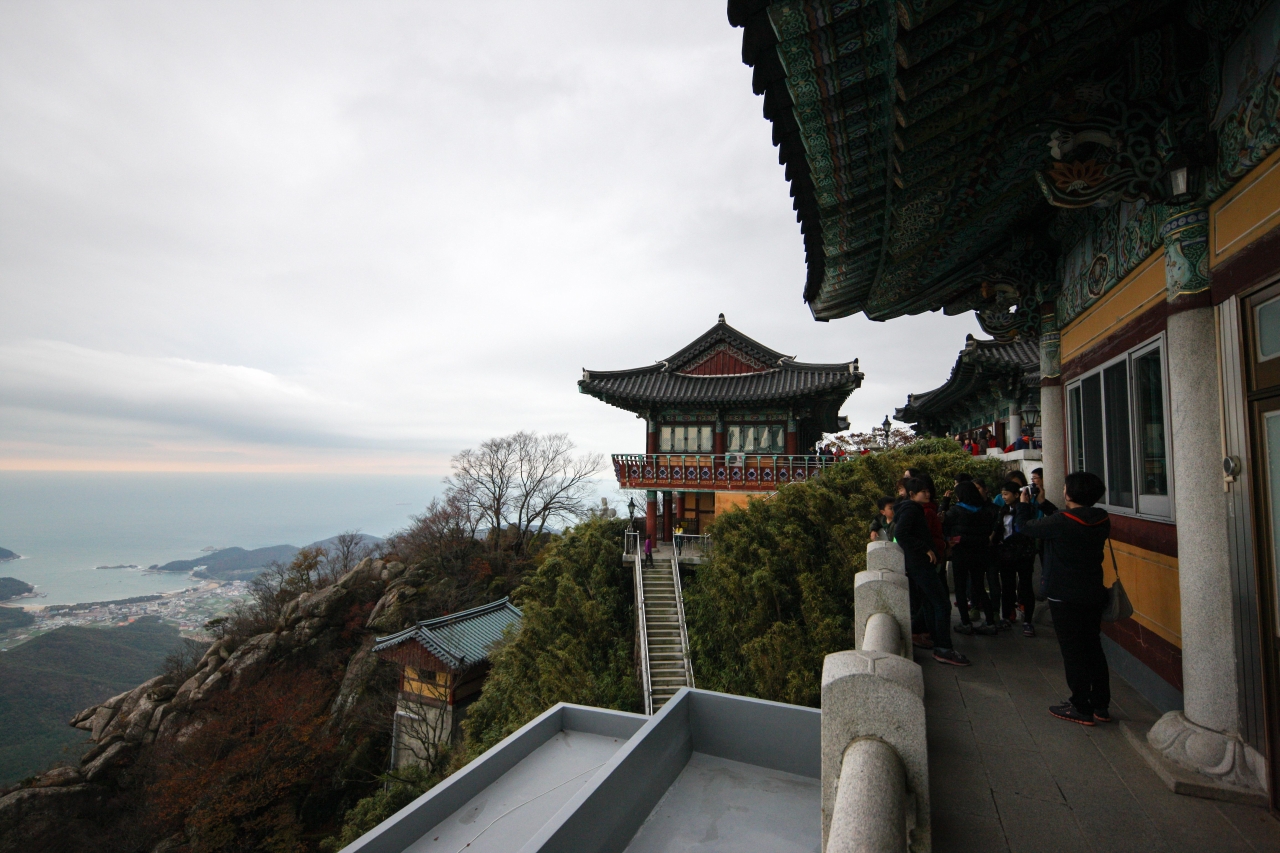
Deep eaves reach over a passage edged by a stone railing. Steps lead toward another building at a different level. The changing height of the roofs makes the hillside visible even when the ground itself is partly hidden.
Boriam’s buildings fit among rocks and sloping terrain. Their side elevations often explain the setting more clearly than an isolated front view. A close railing and a distant stretch of coastline can occupy the same line of sight.
This is an active Buddhist place of worship as well as a scenic destination. Keep circulation space clear and respect the boundaries of prayer halls. The exterior arrangement, painted wood and direction of the steps provide plenty to observe without assuming access to a building’s interior.
Let Geumsan’s rock faces set the scale
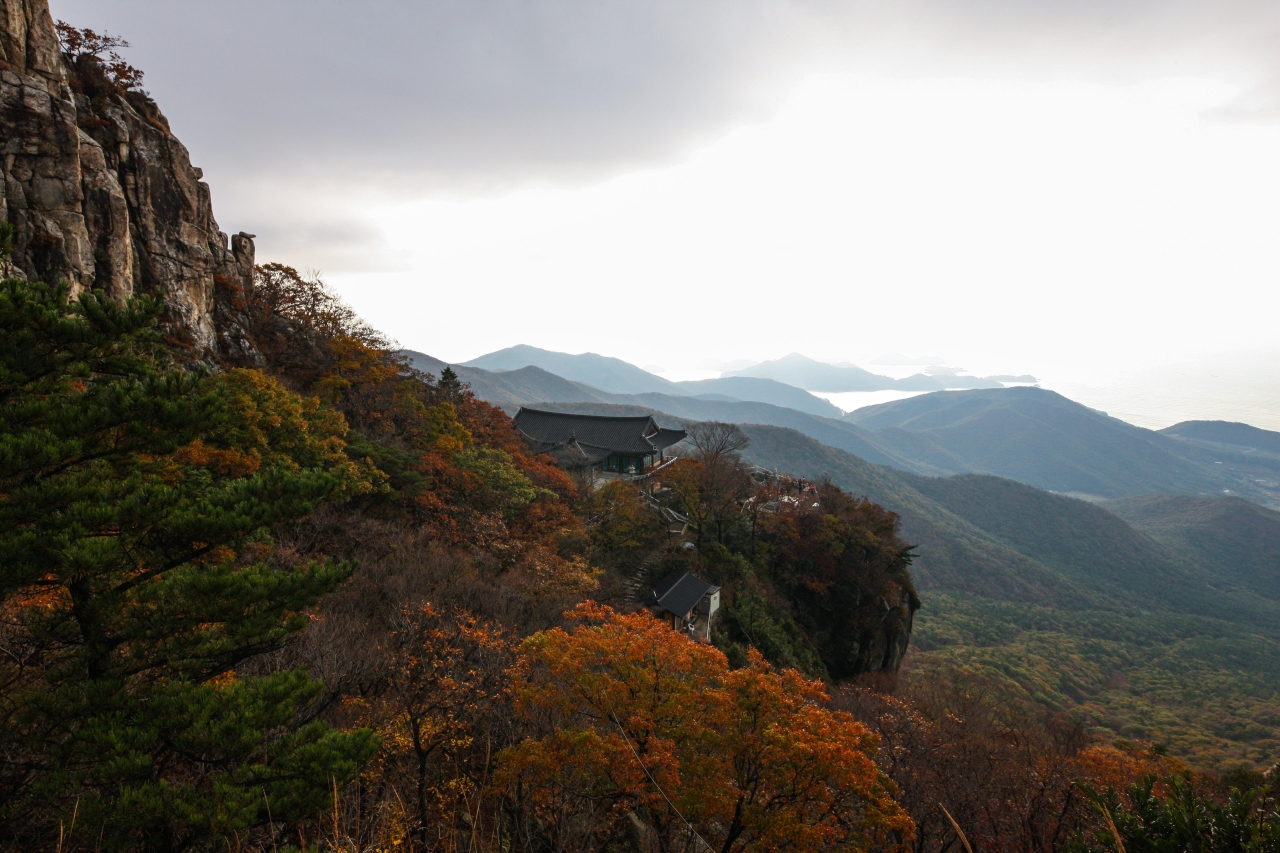
A large rock face rises along one side of the scene, while a tiled roof forms a much smaller horizontal shape below. Trees spread across the slope. Farther away, coastal ridges continue toward the water.
The rock is not one smooth wall. Cracks, projecting edges and separate faces break up its surface. Those irregular lines meet the more deliberate geometry of pillars and tiles, making the contrast between the terrain and the buildings especially clear.
Seasonal foliage changes how much of the rock is exposed. Trees with remaining leaves create one pattern; more open branches reveal another. For a late-fall outing, that changing balance is a better starting point than assuming the mountain will still be at peak color.
Return to the small roof framed by pines and boulders
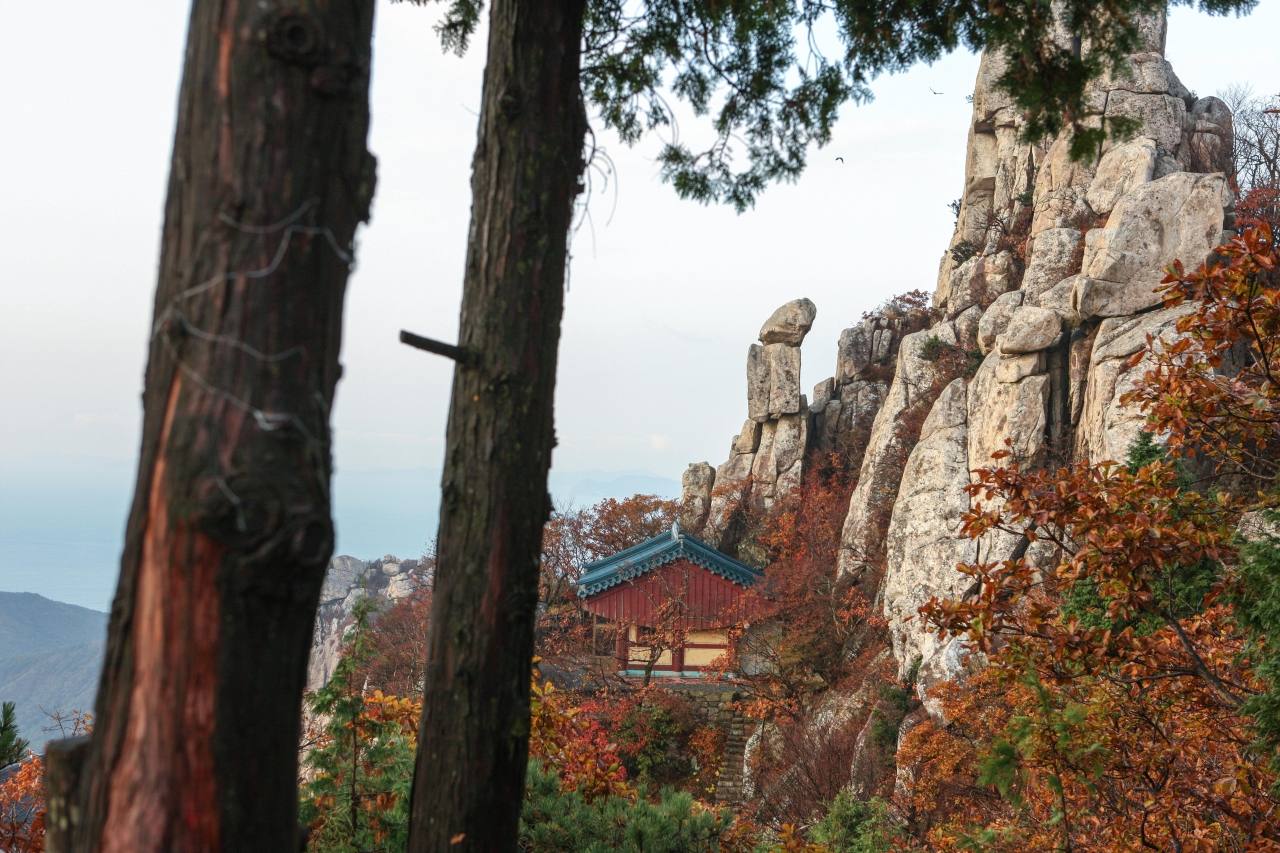
Thick pine trunks partly conceal a small building. Beyond them, a roof edge crosses the base of a much larger boulder. The interrupted view gives the scene depth rather than revealing every part of the temple at once.
The Korea Tourism Organization’s Boriam entry describes the hermitage as a significant Buddhist prayer site on Geumsan Mountain. Its religious character belongs alongside the open coastal outlook, rather than being just a backdrop to the view.
For another perspective on the same island county, explore Namhae German Village’s roofs and sea views. A residential hillside shaped by returning migrants provides a different story from a hermitage built among mountain rocks.
Boriam connects a white stone figure, the small eaves of a pagoda, roofs beneath boulders and islands farther out to sea. After taking in the widest view, looking again at one nearby stone helps bring the mountain setting back to a human scale.
You May Also Like
by Google Adsense