Namhae German Village: Sea Views, Orange Roofs and the Story of Returning Migrants
A hillside village walk connecting German-style houses, Deutscher Platz and the history of Korean miners and nurses who worked in Germany
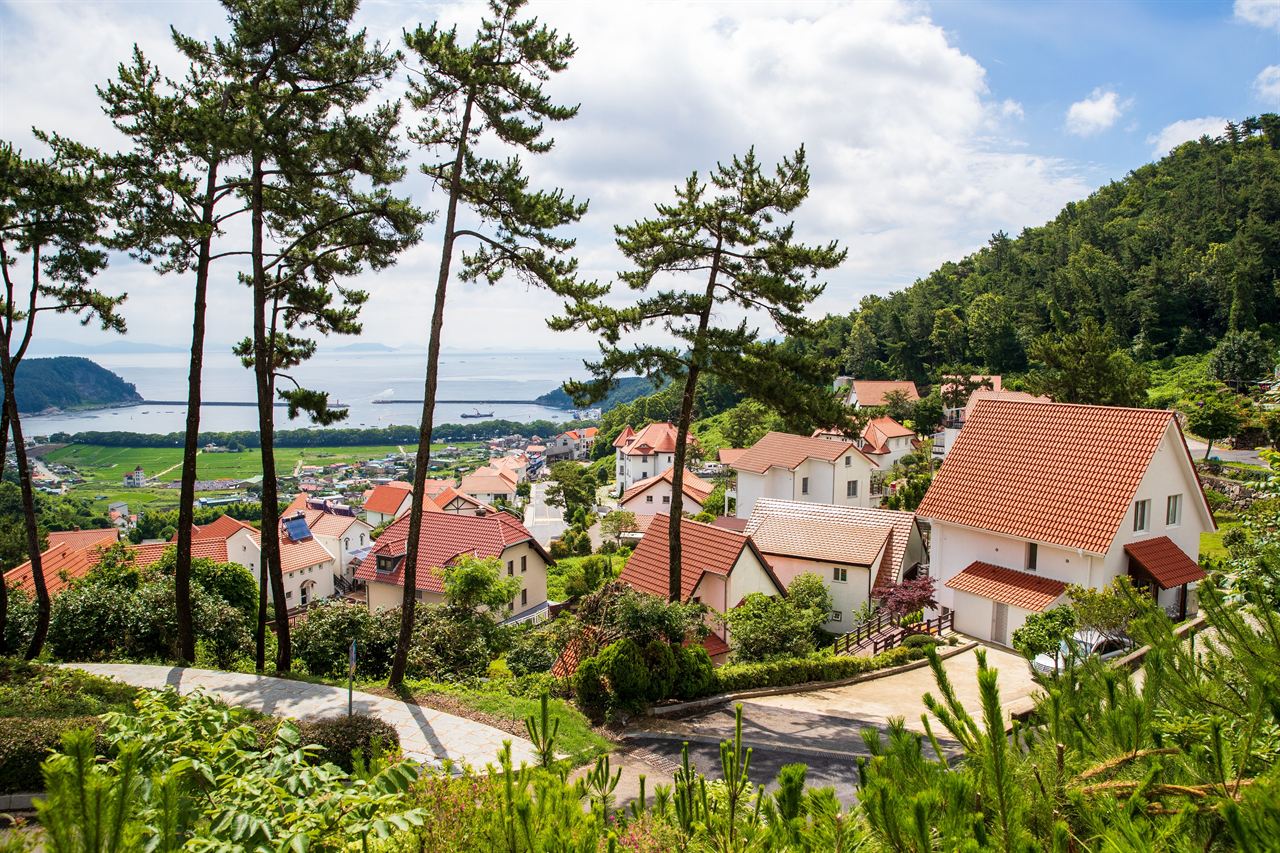
Orange roofs step down the hillside between pine trunks, with the sea opening beyond them. Nearby houses and the more distant harbor share the same line of sight. The slope brings a residential scene and a coastal panorama together.
Namhae German Village is a community on Namhae Island in southern Korea, associated with Korean miners, nurses and other emigrants who returned after living in Germany. Its white walls and distinctive roofs reflect more than an imported architectural style. They also belong to a story of work, migration and returning home.
For a late-fall trip to Korea’s southern coast, the village offers an architectural and historical focus that does not depend on peak foliage. Looking between the houses, the hillside and the spaces devoted to the residents’ history gives the scenery a more specific meaning.
Look at the individual houses of Namhae German Village
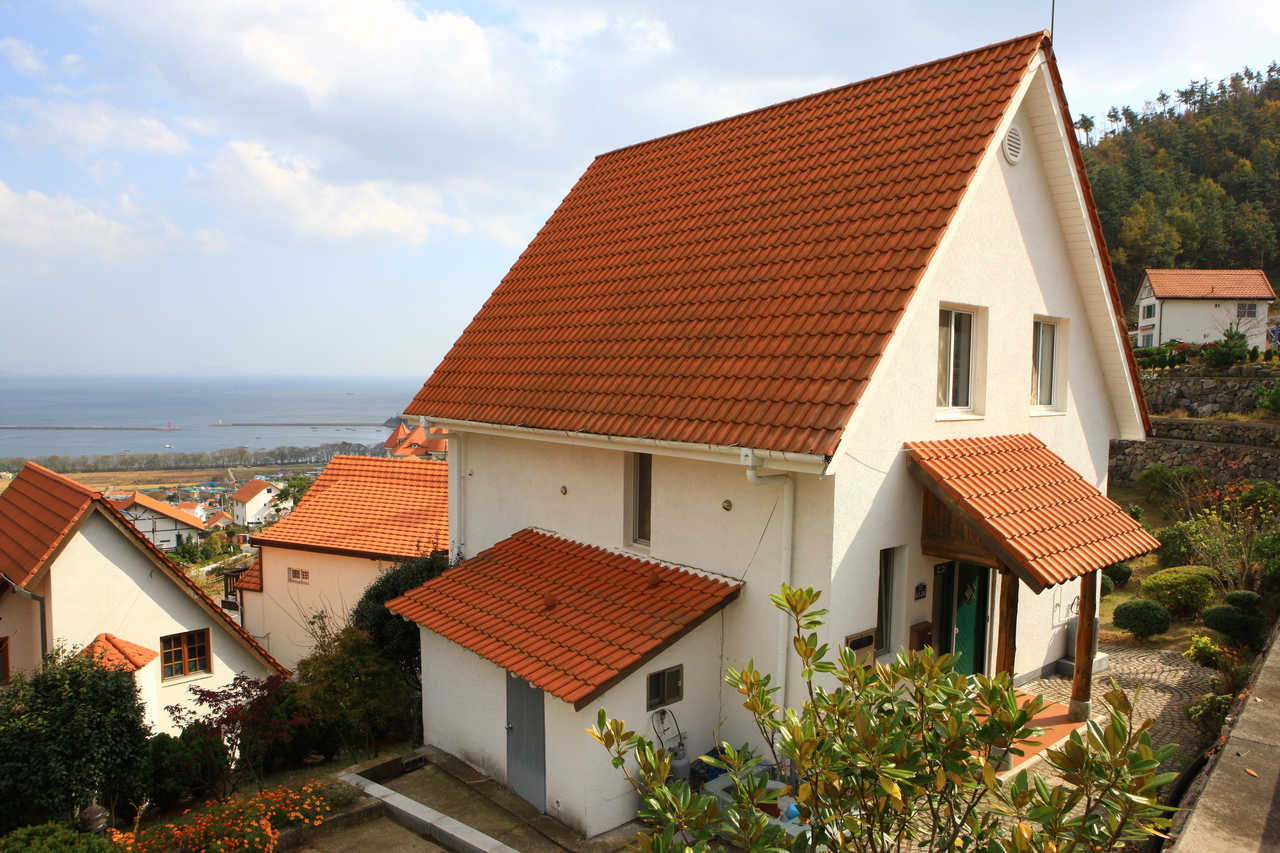
A steep roof covers a white facade, with windows and a smaller entrance roof breaking the building into different parts. Another house sits lower on the slope. Similar colors connect the houses, but their proportions are not identical.
During the village’s development, Namhae County prepared residential plots, while the returning emigrants completed their homes with reference to proposed models and German architectural styles. That history helps explain the combination of a shared visual identity and individual houses.
These are homes rather than unrestricted display buildings. Observing the exteriors from public streets, while respecting private gardens and entrances, is part of understanding the place. Roof shapes, windows and the way each house meets the slope already provide plenty to compare.
Read the settlement through its winding road and changing levels
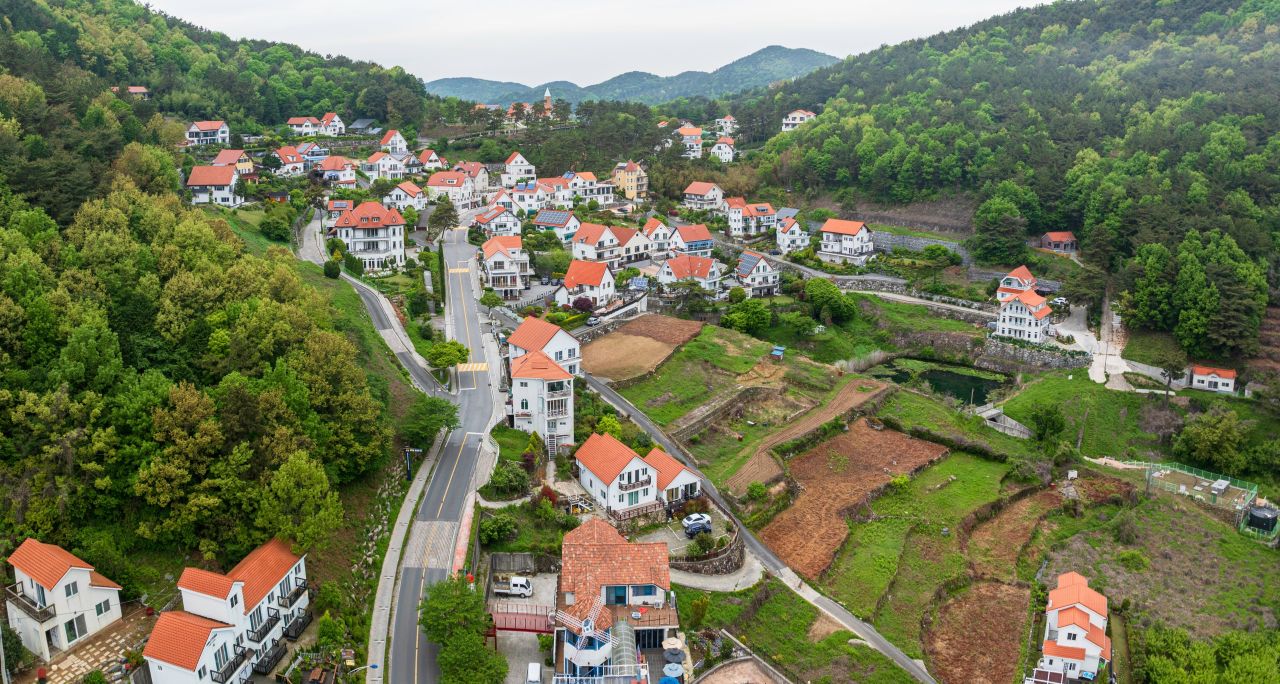
The road curves among houses, with small plots and open ground between them. Roofs rise and fall with the terrain instead of forming a single straight row. The village’s outline follows the slope as much as any architectural plan.
From farther away, orange appears as a continuous theme across the hillside. Closer attention separates it into individual roofs above homes, businesses, paths and planted areas. A view that first resembles one composition becomes a group of spaces used in everyday life.
The gaps matter as much as the houses. A bend in the road changes which roof overlaps another, while the sea or woodland appears between buildings. Comparing a broad overlook with a street-level view helps reveal how the settlement fits into the island landscape.
Find a different architectural frame at Deutscher Platz
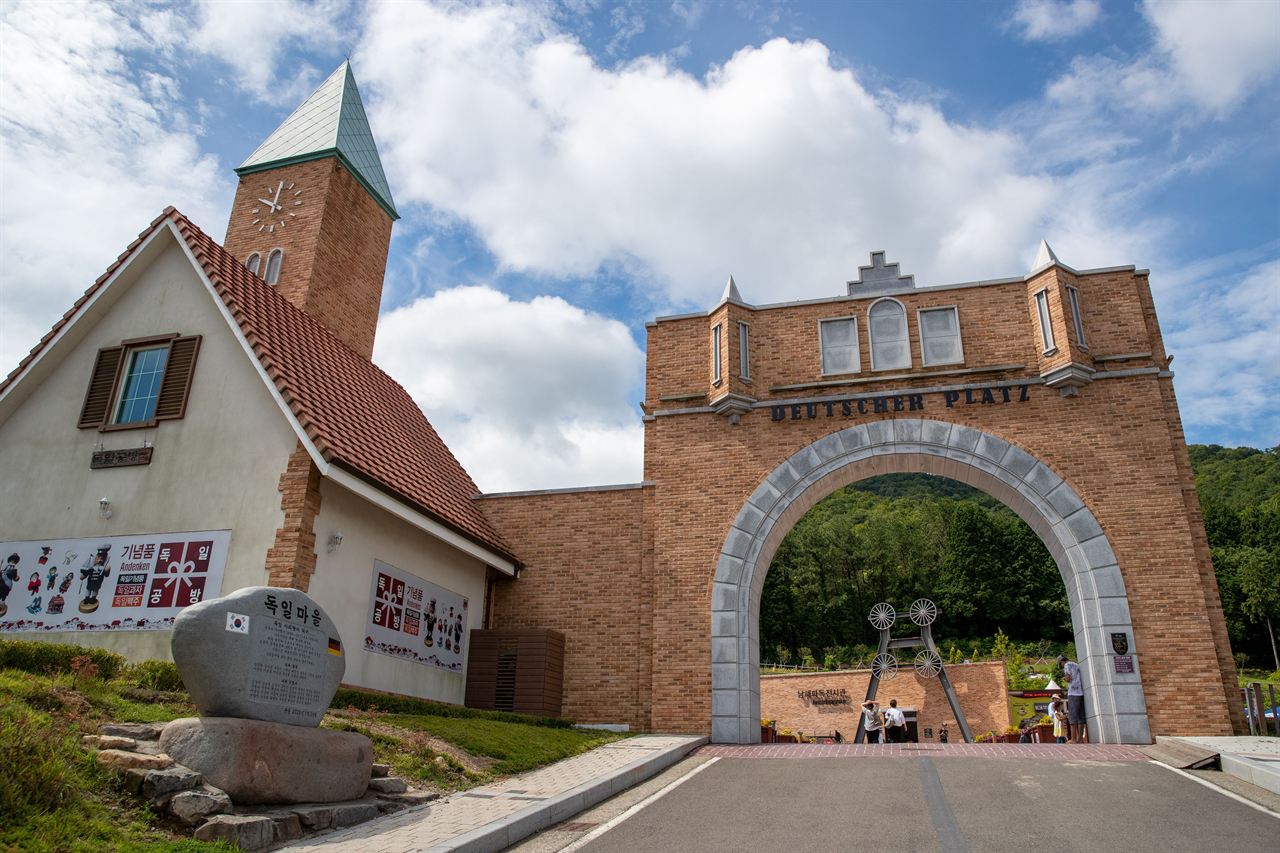
A broad brick arch frames sky and the space beyond it. The clock tower beside it rises vertically, while sloping tiled roofs repeat a color seen throughout the village. Solid masonry creates a different impression from the white house walls farther down the hillside.
The area around Deutscher Platz brings together places associated with the village and the history of Koreans who worked in Germany. The walk shifts from the appearance of homes to the experiences of the people connected with them.
An arch is both a passage and a frame. Buildings, visitors and the woodland beyond it become parts of a smaller view enclosed by brick. It offers another way to look at the village’s architecture after the broad scene of roofs against the sea.
Connect the houses with the history presented at the PaDok Exhibition Hall
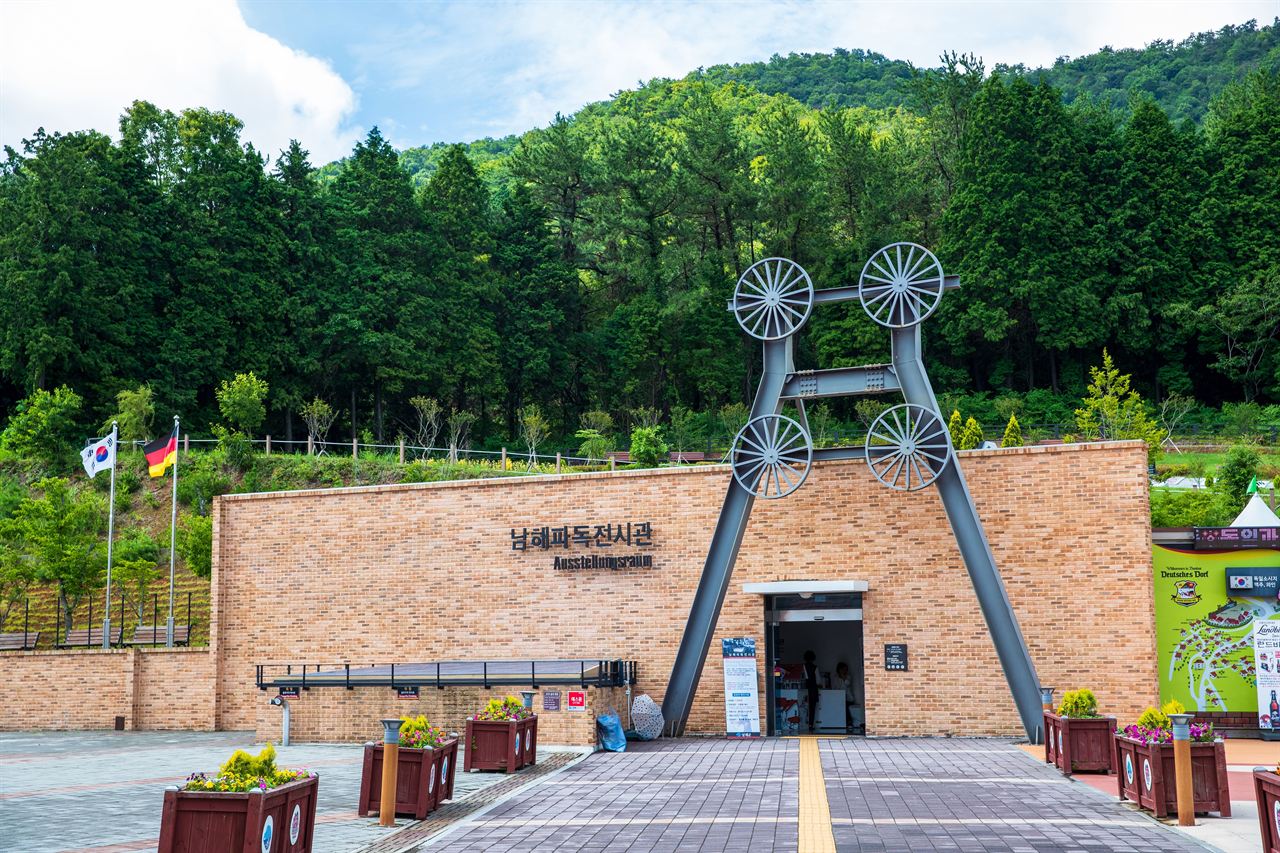
A tall structure with large wheels stands against the exhibition hall’s brick facade. Its mining reference marks a change in subject from houses to workplaces. The exterior introduces the history behind the settlement through a recognizable industrial form.
The PaDok Exhibition Hall addresses the lives of Korean miners and nurses who went to Germany, their experiences abroad and the later development of German Village. Following a remodeling project, it reopened on September 5, 2025, with a renewed exhibition.
That history adds meaning to the orange roofs. The houses are connected to people who worked and built lives in two countries before establishing homes here. Reading the landscape alongside that background makes the village more than a collection of unfamiliar-looking buildings on a Korean island.
Pause beside the memorial park’s quieter forms
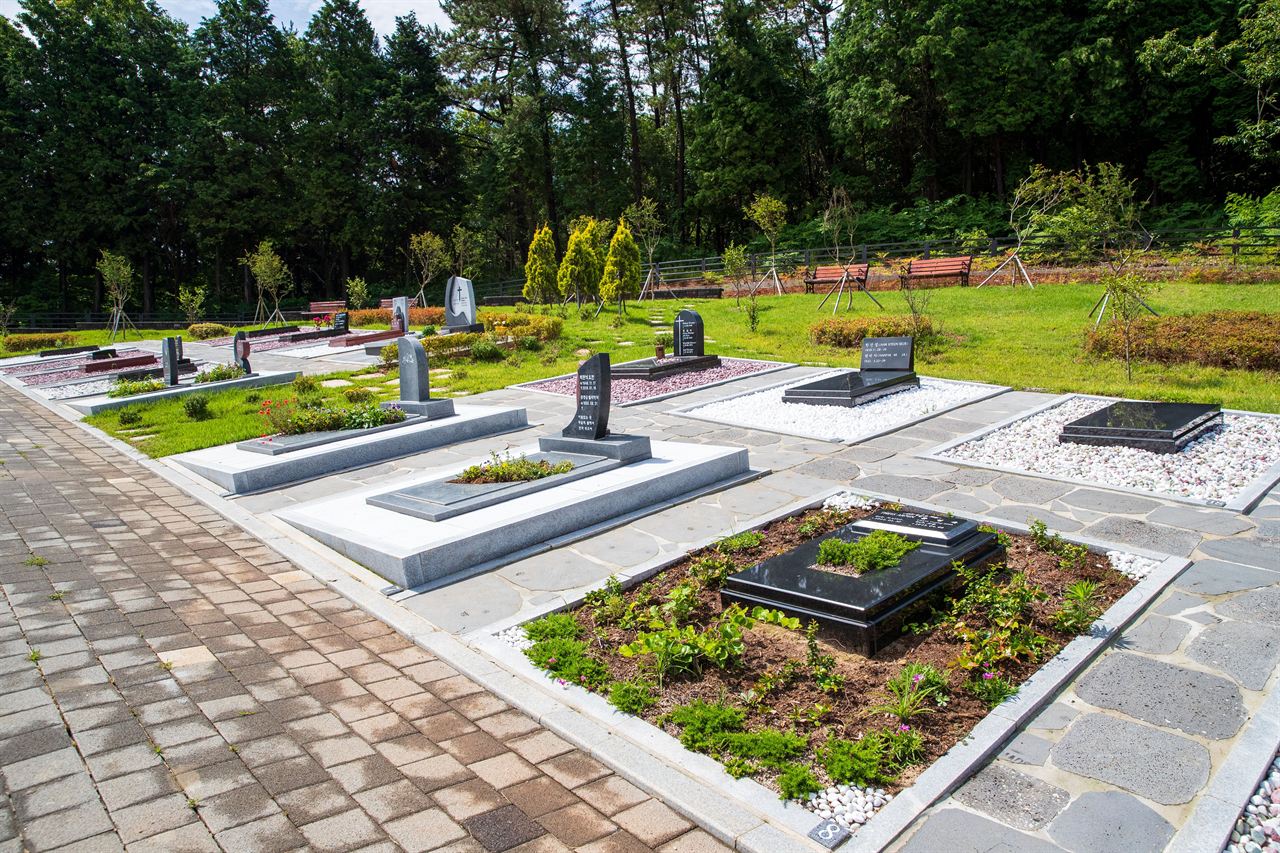
Low memorial markers stand in rows, with benches and trees behind them. The forms are modest compared with the bright roofs and wide coastal views elsewhere in the village. They draw attention to individual lives within the broader migration story.
The village’s official history page describes the residents’ role in shaping their houses, gardens and community. The memorial park adds another part of that story, honoring the miners and nurses whose experiences are closely tied to the place.
For a different kind of living village in Korea, explore Naganeupseong’s thatched houses and lanes. The architecture and historical setting are different, but both places are best understood with respect for the people who live within the scenery.
A walk through Namhae German Village can begin with an eye-catching meeting of orange roofs and blue water, then lead toward the history of the people who built their homes here. Returning to the sea view afterward brings the architecture, everyday life and story of homecoming into the same landscape.
You May Also Like
by Google Adsense