Gwanbangjerim Forest in Damyang: Fall Trees, Streamside Paths and an Old Embankment
Gwanbangjerim Forest in Damyang, where a historic flood-protection grove meets the paths along Damyangcheon Stream
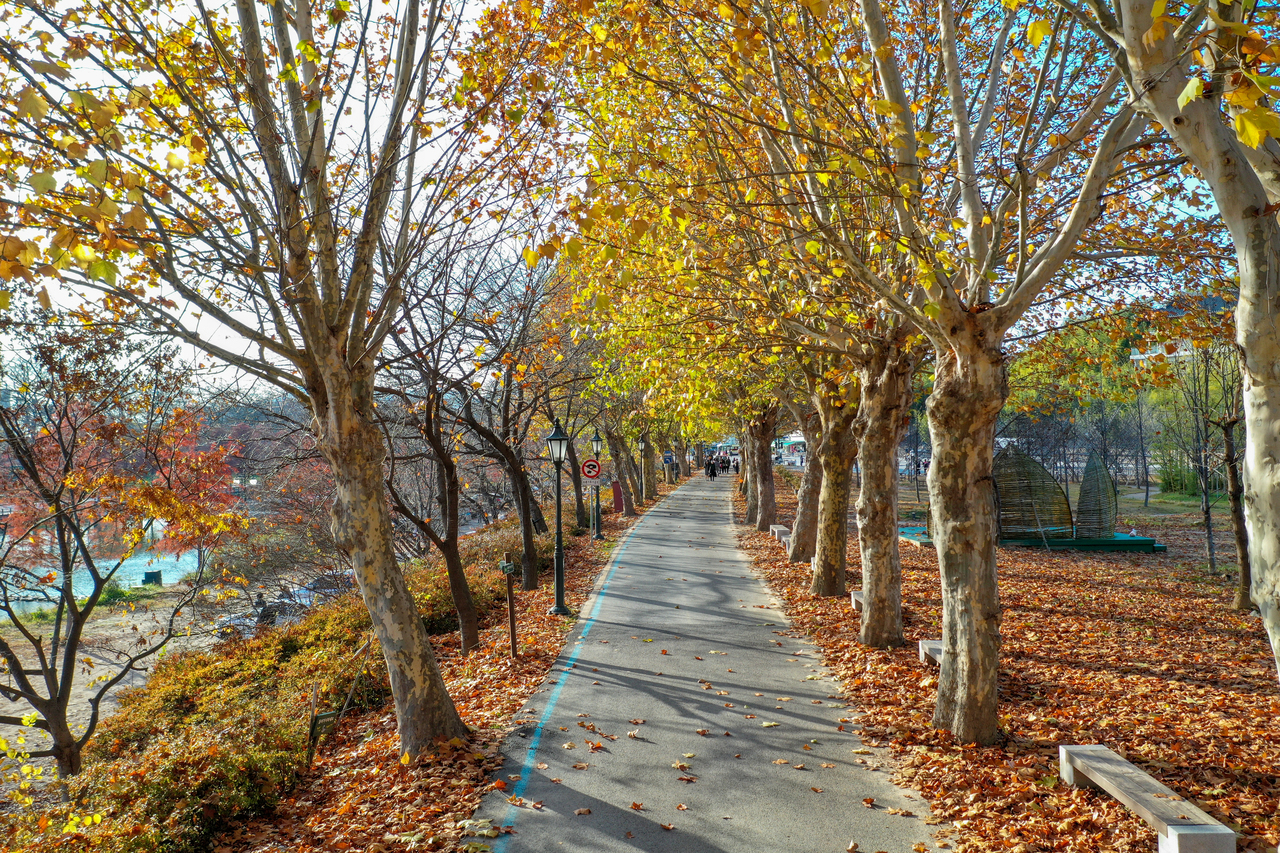
Pale trunks line a long path, with fallen leaves gathering along its edges. Through the branches, the water remains close enough to be part of the view rather than a separate destination.
Gwanbangjerim Forest is a historic planted grove in Damyang, in southwestern Korea. Its original purpose was practical: trees helped protect an embankment beside Damyangcheon Stream. Around that older grove, different paths now reveal the water from different heights.
A fall walk here can connect changing leaf color with the reason the forest exists. The protected old trees, neighboring avenues and lower waterside paths are related parts of the setting, but they are not all the same kind of woodland.
Read the history at the entrance to Gwanbangjerim Forest
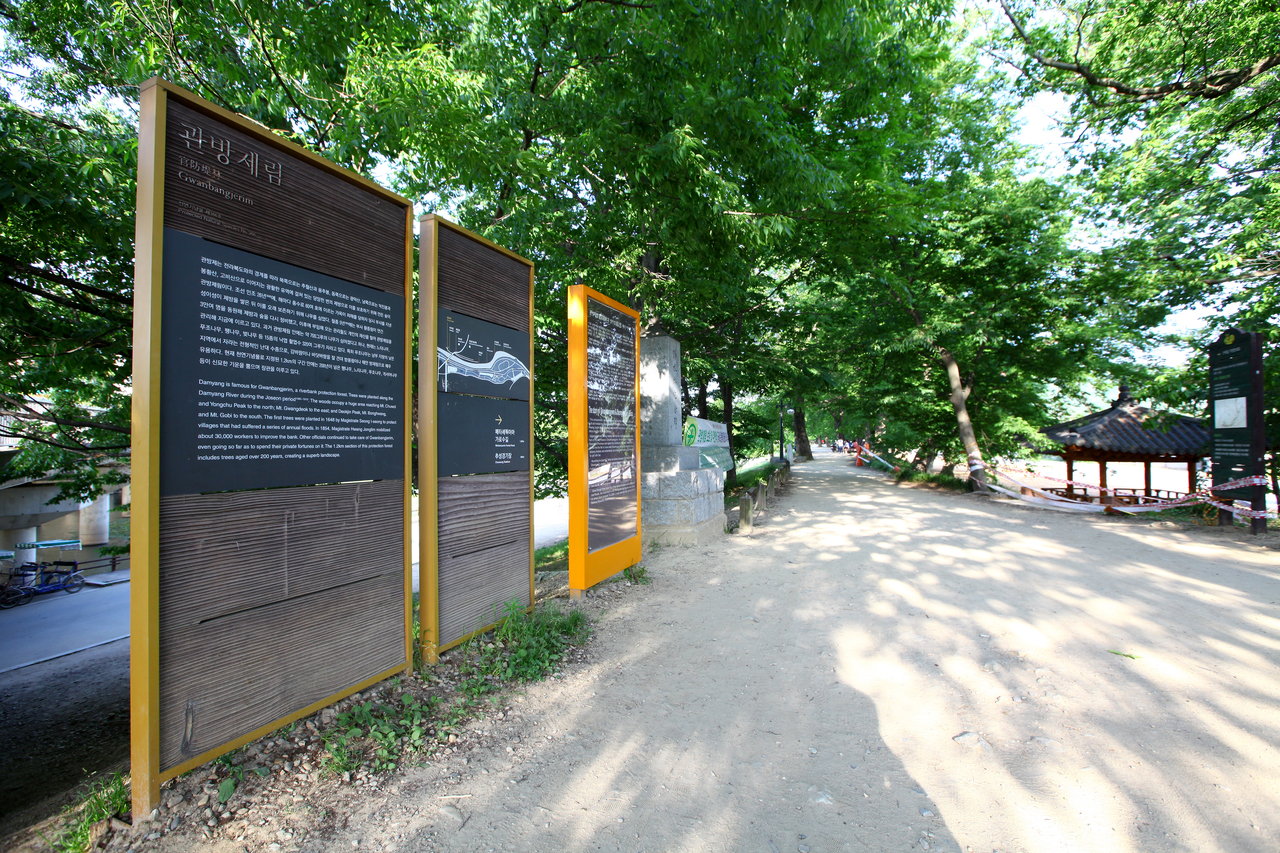
Information boards stand beside a broad earthen path. Beyond them, trees create a shaded corridor, while a lower space opens toward the water. The layout gives a first clue to the relationship between grove and embankment.
Korea Tourism Organization traces the planting to flood-protection work begun in the seventeenth century and expanded in the nineteenth. The trees were part of an effort to protect the settlement, rather than simply to decorate the streambank.
That history changes the way the setting is read. Looking between the raised ground and the channel below makes the forest’s purpose more tangible. A pleasant landscape also preserves evidence of how a town responded to its waterway.
Notice the old trunks and the raised ground
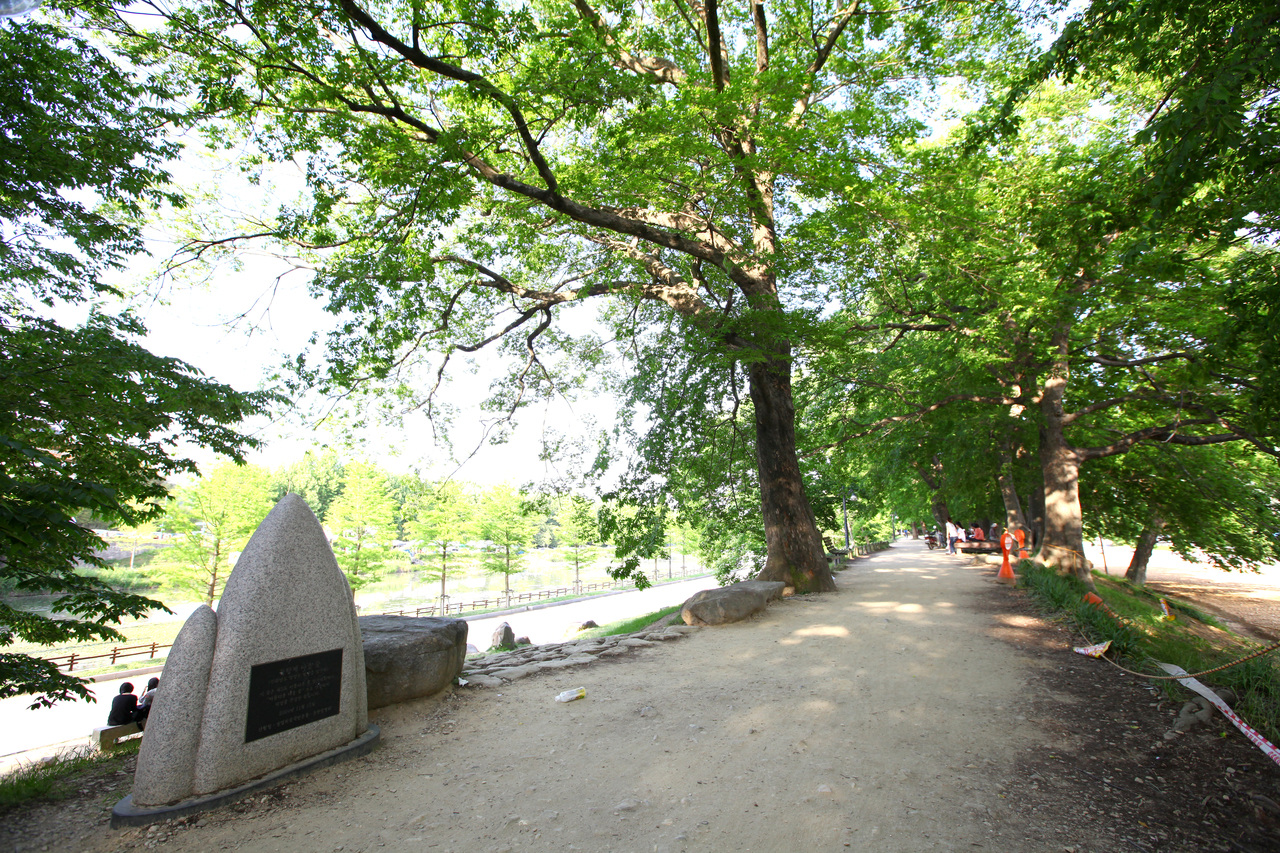
A substantial trunk stands beside the path, with water visible below the slope. At close range, the continuous line of trees breaks into individual roots, branching shapes and spaces between them.
The protected grove includes several kinds of deciduous broadleaf trees, including muku and zelkova. Centuries-old specimens are central to its identity. Nearby rows of street and riverside trees should not automatically be assigned the same age or protected status.
Those differences make the walk more interesting. A broad old crown over an earthen embankment creates a different scene from a regularly spaced avenue. Noticing where each tree stands helps distinguish the historic grove from its wider streamside setting.
Look through the branches toward the town
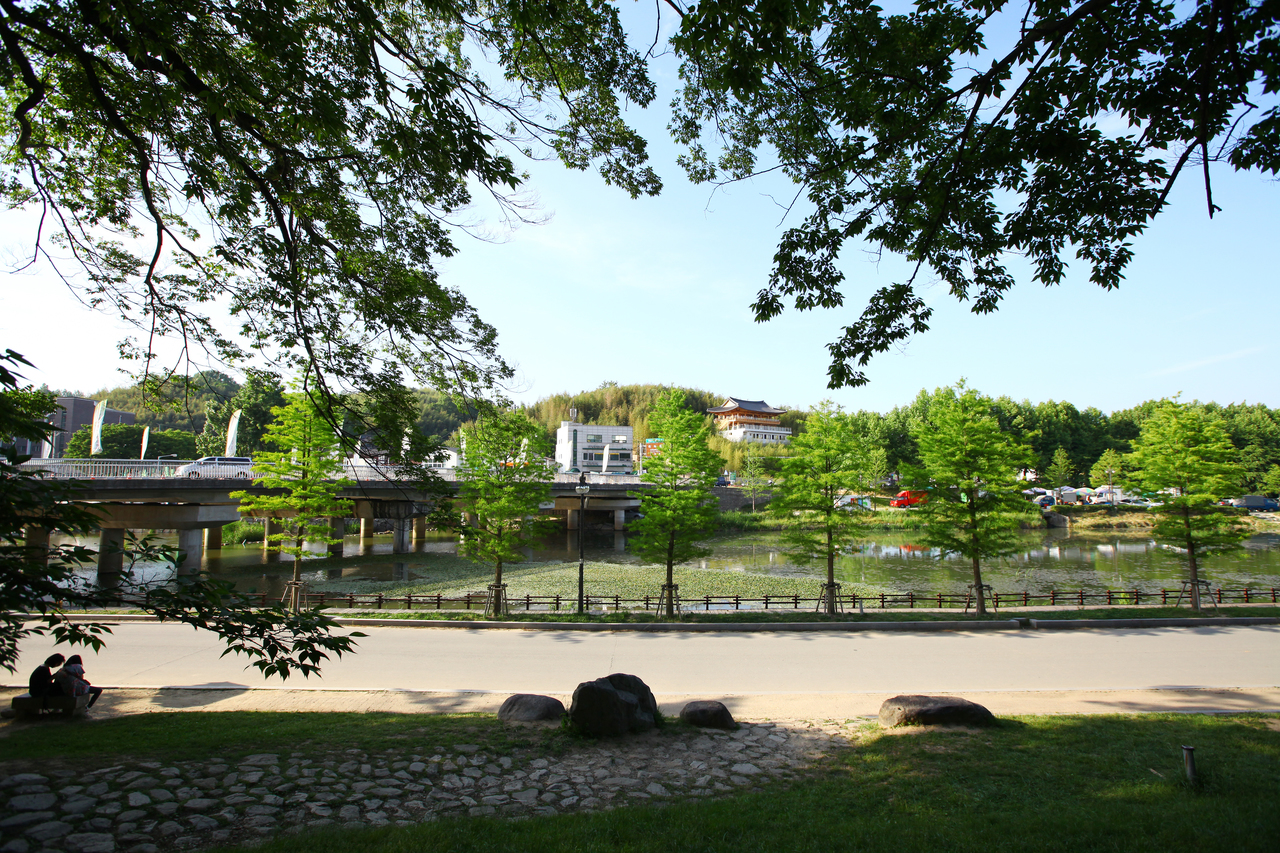
Branches form a close frame around the bridge and buildings across the water. The town remains in view even from beneath the trees, keeping the grove connected to everyday surroundings.
Gwanbangjerim is not a forest reached by disappearing into remote mountains. It sits alongside Damyang’s town center and stream. Shaded ground, open water and the opposite bank are visible within a relatively compact landscape.
The shift in scale is part of its appeal. A rough trunk fills the foreground, then a glance across the channel takes in roads and buildings. The older forest belongs to the living town rather than standing apart from it.
Change perspective on the lower waterside path
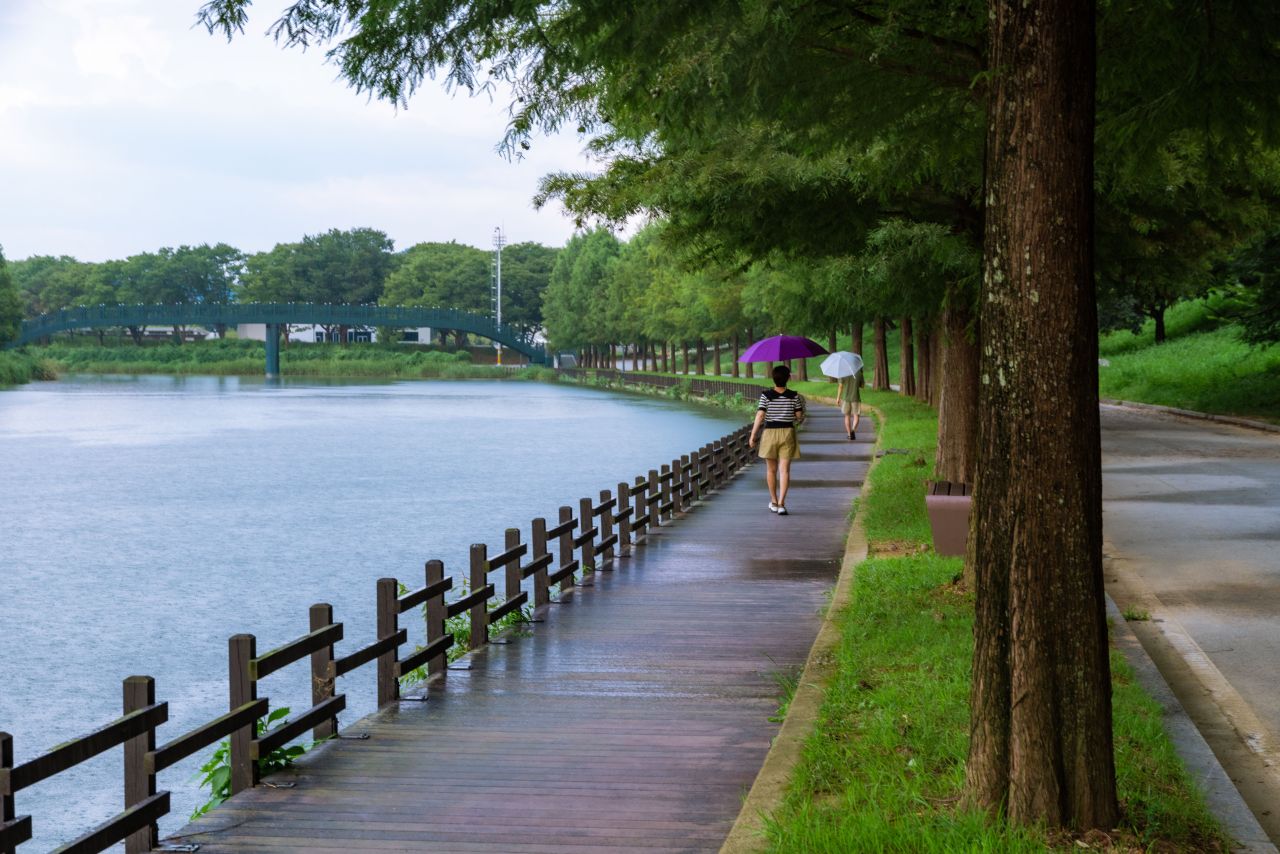
Closer to the water, a deck follows the stream’s edge. A railing and repeated trunks give the route a clear direction, while the raised ground nearby introduces another level into the scene.
The wider Gwanbangjerim area includes more than one kind of path. The historic embankment grove, adjacent avenues and lower streamside routes offer different perspectives on the same waterway. Their relationship is easier to appreciate when they are not treated as one uniform trail.
Leaf color, water appearance and ground conditions change with the season and weather. The lasting feature is the arrangement of trees, paths and water. It gives the walk substance beyond the search for one particular day of fall color.
See the parallel lines of trees and water
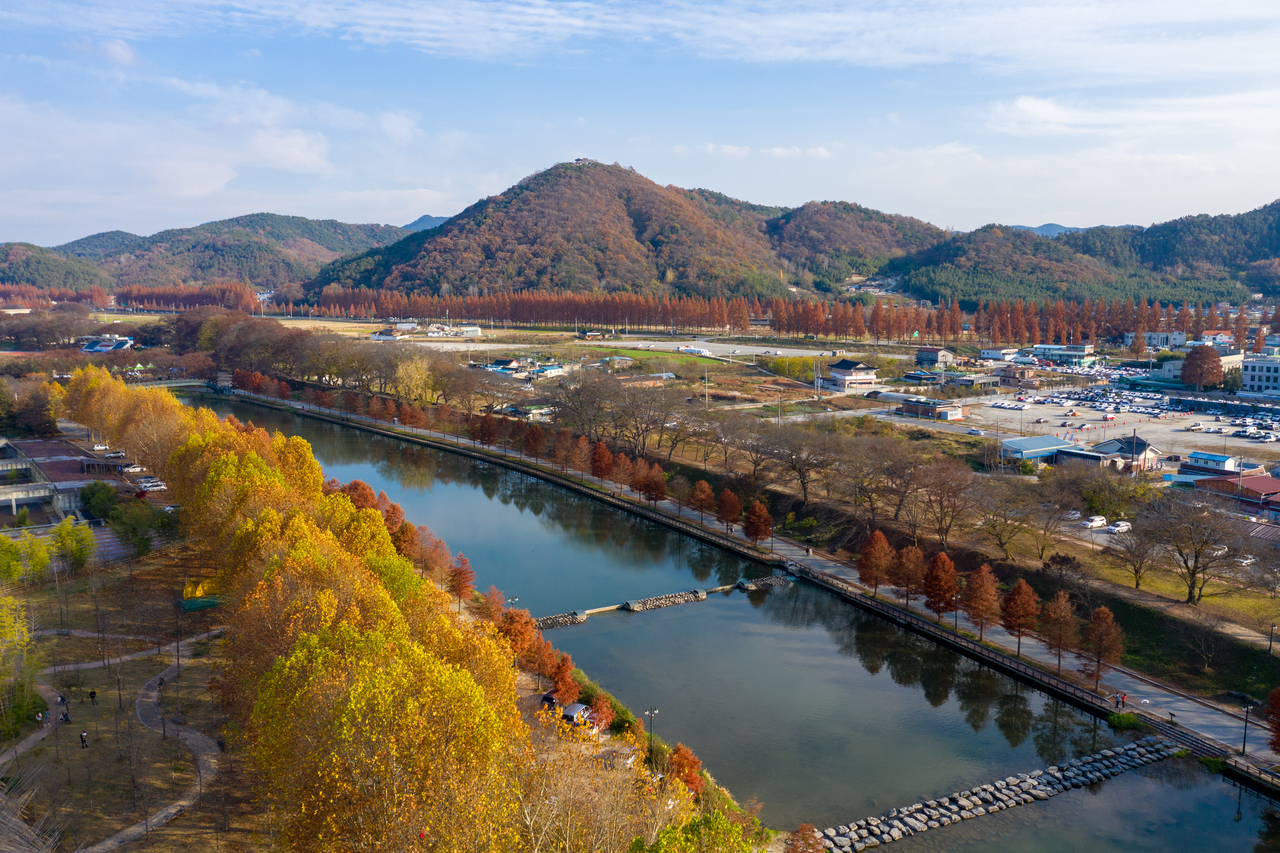
From above, the stream and its neighboring paths become long parallel lines. Individual trunks and patches of shade give way to a broader view of how the planted landscape fits into the town.
Korea Tourism Organization’s Gwanbangjerim guide identifies flood prevention as the forest’s purpose. A scene that can look entirely natural also reflects generations of planting and maintenance.
For another relationship between water and planting in Damyang, Soswaewon Garden’s bamboo and rocky stream provide a different scale. Gwanbangjerim’s story is tied to the wider waterway and the needs of the town.
Gwanbangjerim Forest suits a fall outing that leaves room for both scenery and local history. Moving from an old trunk to the open stream reveals more than a single colorful canopy could show on its own.
You May Also Like
by Google Adsense