Korea Autumn Foliage Forecast 2026: Peak Dates & Weekly Travel Calendar
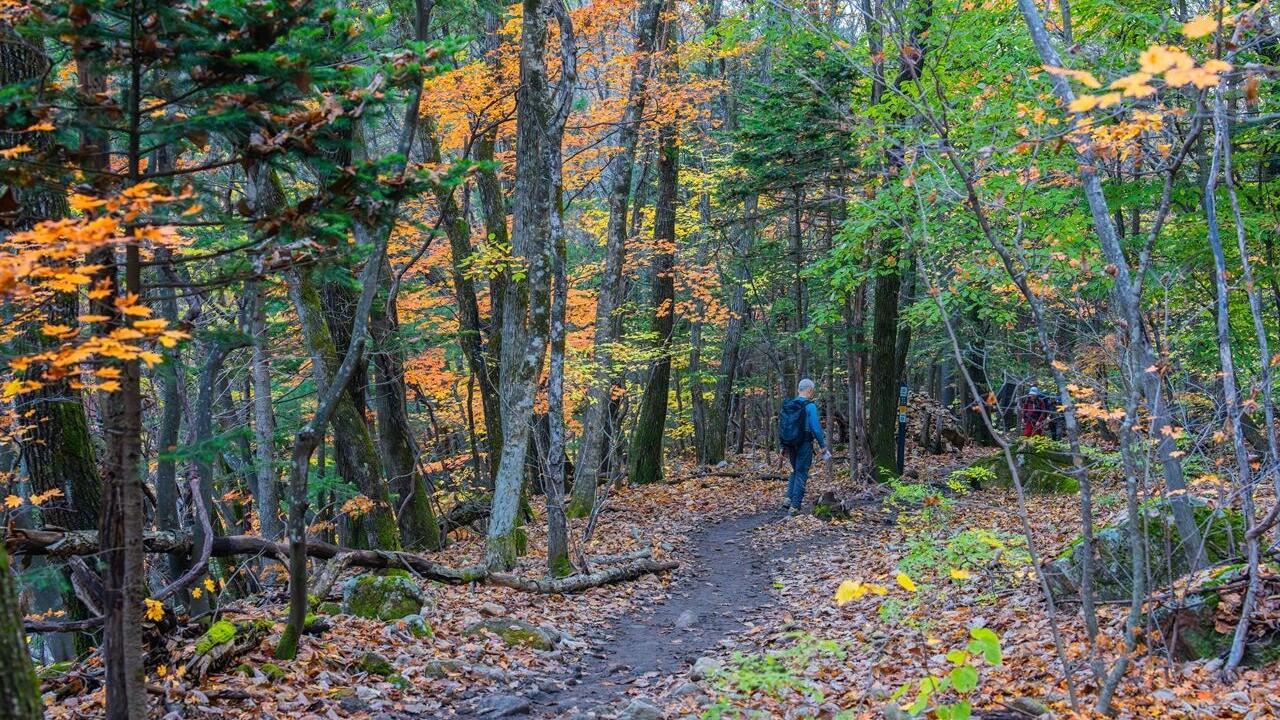
Planning an autumn trip to South Korea is one of the most rewarding travel experiences in Asia, but deciding exactly when to book your flights and hotels can feel daunting.
“Which week in October will offer the most vibrant fall foliage?”, “Will the mountain slopes be fully colored during my visit, or will I arrive to green trees or bare branches?” These are questions every traveler asks.
Because peak foliage lasts only about ten to fourteen days in any given area, pinpointing the right dates is crucial for making the most of your travel investment.
Many international travelers make the mistake of heading out immediately after local news outlets announce “first foliage”.
In South Korea, official meteorological agencies define first foliage when only the upper 20% of a mountain peak shows color. At this early stage, the lower hiking trails, visitor centers, and temple grounds remain almost entirely green.
The true “peak foliage season”—when approximately 80% of the entire mountain canopy bursts into fiery reds, oranges, and golds—arrives about two weeks later.
Misjudging this timing can mean traveling hours from Seoul only to find mostly green forests, or arriving after sudden autumn storms have stripped the branches bare.
Having settled in Korea and explored its national parks through every season, I cross-referenced the official 2026 forecast data from the Korea Forest Service and the Korea Meteorological Administration (KMA) to build this weekly travel calendar.
By understanding how the autumn wave moves from northern alpine peaks down to the southern valleys, you can plan your flights, rail passes, and day trips with total confidence.
Understanding Korea’s Autumn Foliage: First Leaves vs. Peak Season
When planning your itinerary, the single most important rule is distinguishing between “first foliage” and “peak foliage” as classified by Korean meteorological standards.
- First Foliage (Start): Recorded when approximately 20% of the mountain summit displays color. High ridgelines begin to shift, but valleys and general walking trails look largely like late summer.
- Peak Foliage (Full Bloom): Recorded when 80% or more of the entire mountain slopes and lower valleys are blanketed in vivid crimson, gold, and amber. This is the postcard-perfect view travelers envision.
The progression from first color to full peak takes between 12 and 15 days depending on altitude and nightly temperatures.
Therefore, when you read that foliage has begun on a certain mountain, target your visit roughly two weeks after that date for the most breathtaking scenery.
For 2026, slightly higher late-summer temperatures in early September mean that the first foliage dates will start 1 to 2 days later than historic averages.
However, once cold continental air moves down from the north in mid-October, significant day-and-night temperature swings exceeding 10°C will trigger intense pigment production. This creates unusually deep, crisp, and vivid autumn colors across the Korean peninsula.
2026 Korea Autumn Foliage Forecast: Complete Peak Dates Table
Here is the complete schedule for South Korea’s top 15 national parks and scenic mountains, compiled from the Korea Forest Service and KMA official records.
For the best photo opportunities, plan your excursion within 3 to 5 days on either side of the predicted peak date.
Region & Park | First Color | Peak Foliage Window | Highlights & Key Trails |
|---|---|---|---|
Gangwon: Seoraksan | Sep 28 | Oct 18 – Oct 22 | First in Korea; Jujeongol & Cheonbuldong valleys |
Gangwon: Odaesan | Oct 3 | Oct 17 – Oct 21 | Gentle 9 km Seonjaegil Trail & Woljeongsa fir forest |
Gangwon: Chiaksan | Oct 8 | Oct 22 – Oct 26 | Guryong Valley and Seryeom Falls mountain trail |
Seoul: Bukhansan | Oct 16 | Oct 27 – Oct 31 | Subway accessible; Uiryeong Pass & Baegundae peak |
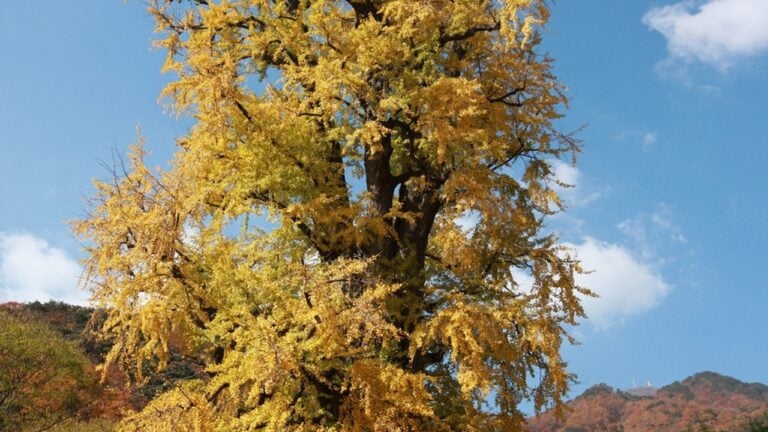
Gyeonggi: Yongmunsan | Oct 18 | Oct 28 – Nov 1 | 1,100-year-old giant golden ginkgo tree in Yangpyeong |
Gyeonggi: Namhansanseong | Oct 19 | Oct 29 – Nov 2 | UNESCO fortress wall panorama & scenic drive |
Chungbuk: Songnisan | Oct 18 | Oct 28 – Nov 1 | Beopjusa Temple barrier-free Seojogil boardwalk |
Chungnam: Gyeryongsan | Oct 20 | Oct 29 – Nov 2 | Gapsa Temple forest trail with dense maple canopy |
Jeonbuk: Naejangsan | Oct 30 | Nov 4 – Nov 8 | Korea’s premier maple destination; Uhwajeong pond |
Jeonnam: Baekyangsa | Oct 29 | Nov 3 – Nov 7 | Ssanggyeru pavilion water reflections & Baegambong |
Gyeongnam: Jirisan | Oct 14 | Oct 24 – Oct 28 | Piagol Valley, Baemsagol, and Ssanggyesa Temple path |
Gyeongbuk: Juwangsan | Oct 19 | Oct 26 – Oct 30 | Dramatic rock gorge, waterfalls, and flat valley walk |
Gyeongnam: Gayasan | Oct 16 | Oct 26 – Oct 30 | Haeinsa Temple Sorigil stream trail with clear waters |
Daegu: Palgongsan | Oct 20 | Oct 30 – Nov 3 | Scenic cable car ride and stone Buddha Gatbawi trail |
Jeju Island: Hallasan | Oct 18 | Oct 29 – Nov 2 | Yeongsil Trail volcanic rock formations and high forest |
Before heading out, you can check live conditions and mountain webcam feeds on the Korea Meteorological Administration (KMA) Seasonal Foliage Tracker.
Weekly Autumn Travel Calendar: Where to Go by Week
If your trip dates are already fixed by flights, matching your schedule to the regional peak zone is the most reliable strategy.
Here is how the autumn foliage wave moves across South Korea week by week.
Mid-October (Oct 17–22): Northern Alpine Peaks (Seoraksan & Odaesan)
If your travel dates fall around mid-October, head straight to Gangwon Province in the northeast.
Seoraksan National Park is the first major mountain in Korea to turn crimson. While the jagged Dinosaur Ridge attracts serious mountaineers, casual walkers can take the Seoraksan Cable Car to Gwongeumseong Fortress or stroll the easy, boardwalk-lined Jujeongol Valley from Osaek.
For a tranquil forest experience away from the rugged cliff climbs, neighboring Odaesan National Park is unmatched.
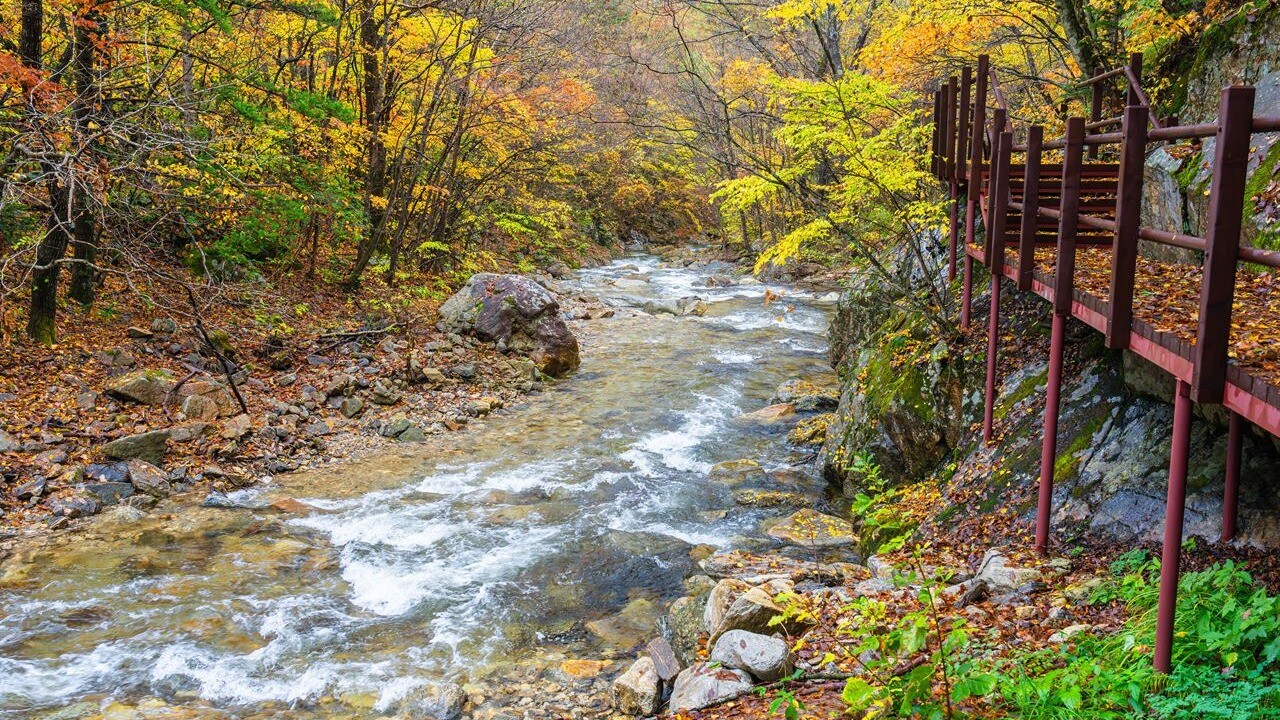
The 9 km Seonjaegil Trail winds alongside crystal-clear valley streams between Woljeongsa Temple and Sangwonsa Temple. With gentle slopes and wooden footbridges, it offers an easy, immersive autumn walk for all fitness levels. Learn how to plan your day in our detailed Odaesan National Park Seonjaegil Trail Guide.
Late October (Oct 27–31): Seoul & Central Inland (Bukhansan, Yangpyeong, & Fortresses)
The final week of October is the golden window for travelers basing themselves in Seoul.
Bukhansan National Park, reachable directly by Seoul Subway Line 3 or the Ui LRT line, provides breathtaking views of granite peaks wrapped in amber forest canopies.
Just an hour east of Seoul by local train, Mount Yongmunsan in Yangpyeong boasts Korea’s most iconic autumn landmark: an 1,100-year-old ginkgo tree standing 42 meters tall. Its colossal golden crown draws visitors from around the world. See transport directions and itinerary tips in our Yongmunsa Ginkgo Tree Day Trip Guide.
Other premier autumn day trips from Seoul include walking along historic stone battlements with our Namhansanseong Fortress Autumn Drive Guide, or escaping into a designated UNESCO biosphere reserve with our Korea National Arboretum Autumn Forest Guide.
In the central inland region, Songnisan National Park’s Seojogil boardwalk offers a scenic lakeside trail fully accessible for wheelchairs and strollers.
Early November (Nov 3–8): Southern Highlights (Naejangsan, Baekyangsa, & Juwangsan)
The grand finale of Korea’s autumn foliage unfolds across the southern provinces during the first full week of November.
Naejangsan National Park in Jeonbuk Province is widely celebrated as the single best fall foliage destination in South Korea. The park is famous for its “baby maples” (aegi danpung), small palm-sized leaves with an extraordinarily deep, scarlet hue. The iconic morning view of Uhwajeong Pavilion floating on a glassy pond surrounded by crimson branches is a photographer’s dream.
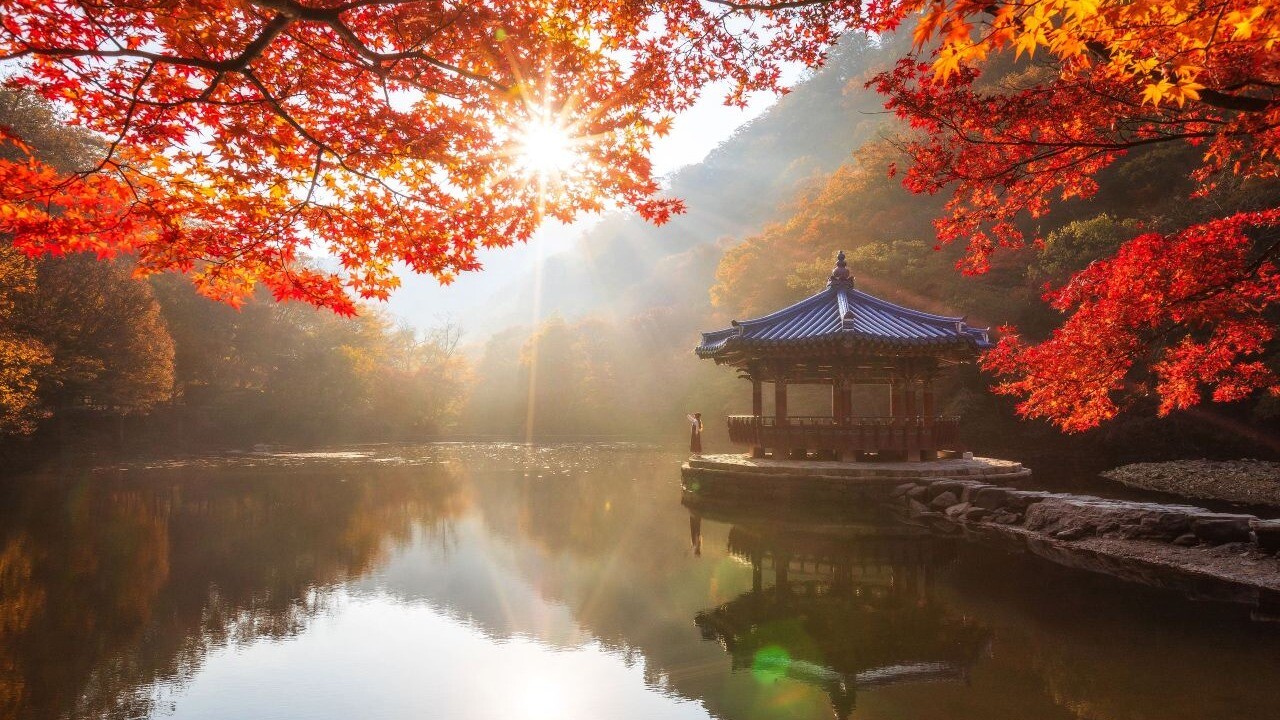
Just across the ridge, Baekyangsa Temple in Jangseong offers serene water reflections of Ssanggyeru Pavilion, detailed in our Baekyangsa Temple Autumn Reflections Guide. Drivers can also take in sweeping high-altitude colors with our Muju Jeoksangsan Scenic Foliage Drive.
In the southeast, Juwangsan National Park near Cheongsong offers an otherworldly landscape of towering volcanic rock pillars and deep ravines.
The flat hiking path leading through Ju-bang Valley toward Yongchu Falls is smooth and easy, allowing visitors of all ages to marvel at cascading waters bordered by brilliant yellow and red trees.
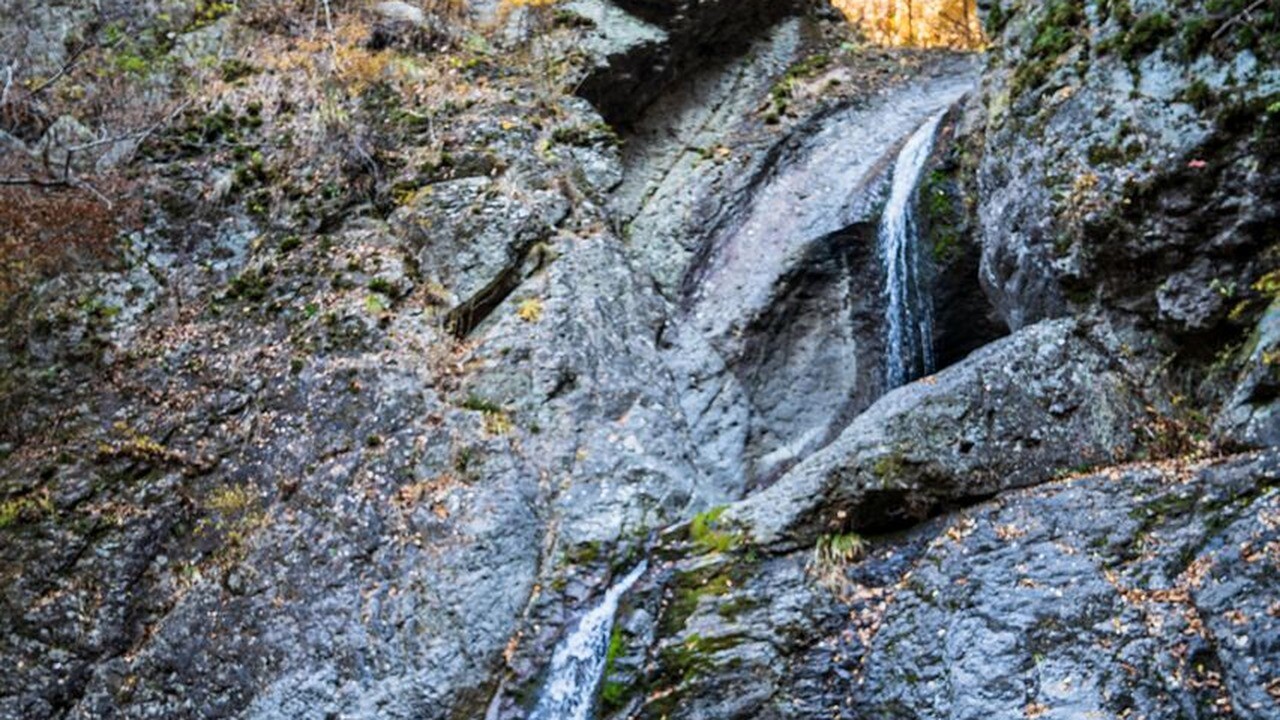
Meanwhile, Jirisan National Park’s Piagol Valley and the serene temple road leading to Ssanggyesa Temple in Hadong create an unforgettable southern finale.
3 Essential Tips for Booking Your Korea Autumn Trip
1. Book KTX trains and hotels 3 to 4 weeks ahead: Accommodations near Seoraksan, Odaesan, and Naejangsan book up completely over peak weekends. Reserve your high-speed train tickets on Korail as soon as the 30-day booking window opens.
2. Arrive before 8:00 AM on weekends or use express day shuttles: Access roads and trailhead parking lots at major national parks often gridlock by 8:30 AM. Taking organized morning tour buses from Seoul or arriving at dawn saves hours in transit.
3. Dress in thermal layers with a windbreaker: Autumn valley temperatures drop 5°C to 8°C below urban centers like Seoul or Busan. Mountain winds are sharp, so pack a packable down jacket, fleece, and sturdy walking shoes.
Official nationwide forest conservation updates and ecological announcements can also be reviewed on the Korea Forest Service Official Portal.
Frequently Asked Questions (FAQ)
When is the absolute best time to see peak autumn foliage in South Korea?
For northern alpine parks like Seoraksan and Odaesan, the optimal window is October 17 to 22. For central mountains and Seoul parks like Bukhansan, target October 27 to 31. For premier southern parks like Naejangsan and Baekyangsa, the peak arrives between November 4 and 8.
What is the practical difference between first foliage and peak foliage?
First foliage indicates that the uppermost 20% of a mountain summit has started changing colors, while lower hiking trails remain predominantly green. Peak foliage occurs when 80% or more of the entire mountain canopy is colored, creating the dense red and golden tunnels travelers seek. Peak conditions arrive roughly two weeks after first foliage.
Which autumn foliage spots in Korea can be visited without hiking gear?
Top scenic spots requiring no specialized climbing gear include the Seonjaegil Trail at Odaesan, the Seojogil wooden boardwalk at Songnisan, the Ju-bang Valley flat path at Juwangsan, and the entrance temple walks at Naejangsan and Baekyangsa. All feature gentle, well-paved trails suitable for casual sneakers or family travel.
Is it worth visiting Korean national parks for autumn leaves on cloudy or rainy days?
Yes. While sunny skies produce bright vistas, light rain and misty mountain fog actually deepen the color saturation of damp maple leaves, producing dramatic, moody photographic conditions. However, wet stones and wooden walkways become slippery, so waterproof footwear with solid traction is strongly advised.
Verification: Information verified as of September 2026. Compiled from the Korea Forest Service, the Korea Meteorological Administration, and Korea National Park Service field records. Because actual peak timing varies with seasonal rainfall and daily temperature swings, always verify live conditions prior to departure.
Reviewed by: Bomi Kim · All100:Travel Editorial Policy
You May Also Like
by Google Adsense